Is the Sheaf of Paddy (Dhaner Shish) BNP’s or NAP’s?
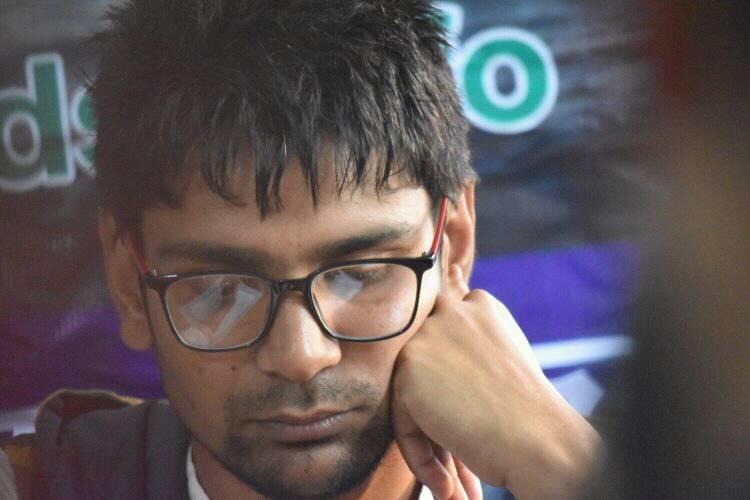
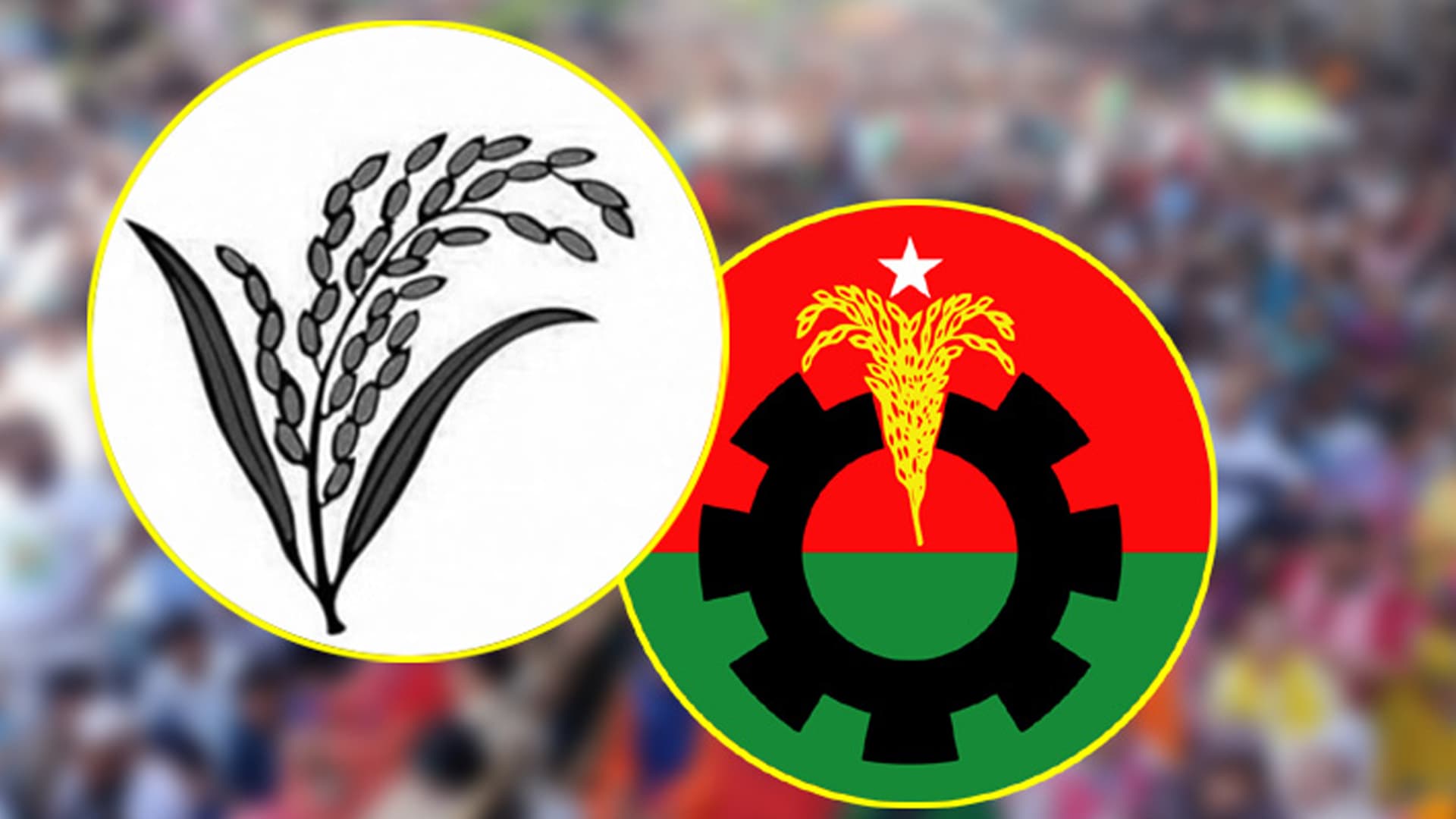
After the founding of the BNP, during the 1979 national parliamentary elections, the party—through Jadu Miah—chose NAP’s traditional election symbol, the Sheaf of Paddy.
For years, many BNP leaders—both senior and grassroots—have cautiously claimed that Maulana Abdul Hamid Khan Bhashani gifted the “Sheaf of Paddy” (Dhaner Shish) symbol to the Bangladesh Nationalist Party (BNP). This claim has sparked considerable debate and concern among many. Even Mirza Fakhrul Islam once made such a statement. This time, however, the assertion did not come from ordinary leaders; it emanated from the highest echelons of the BNP, claiming that Maulana Bhashani himself had handed over the symbol to the party. Many in the new generation of BNP supporters even believe this narrative.
Seeing the BNP Secretary General make this claim without any reservation, I waited for a long time, hoping that someone—anyone—would speak up and present the historical facts and logical arguments. Unfortunately, my hopes were dashed. I did not see anyone address the issue properly; not a single word was uttered. Even followers of Maulana Bhashani remained largely silent, with no strong protest coming from them. The BNP chief has once again poured fuel on this controversy. Only a few voices have been raised online, while the rest have stayed indifferent.
Do people really not know the true origin of the “Sheaf of Paddy” symbol? How did it eventually become associated with the Bangladesh Nationalist Party (BNP)? In any case, the need to write about this has now become urgent. I had written on this topic during the Awami League era, but no newspaper published it. This time, I have mustered the courage to release a revised and updated version of that article.
It was November 1975. The government of Khondaker Mostaq Ahmad was still in power. Mashiur Rahman Jadu Miah was released from jail. Around the time of the Farakka Long March, Jadu Miah was elected as the future chairman of the National Awami Party (NAP). He was expected to shoulder the party’s major responsibilities after Maulana Bhashani’s death. Truth be told, although Maulana Bhashani had prior experience with Jadu Miah, there was no alternative to a democratic decision in this matter.
About six months after leading the final and most significant Farakka March of his life, on 17 November 1976, Maulana Abdul Hamid Khan Bhashani passed away at Dhaka Medical College Hospital. In November of the previous year, immediately after his release from jail, Jadu Miah had gone to London to meet his brother, Mokhlesur Rahman, under the pretext of medical treatment. Subsequent events and his brother’s account made it clear that the trip was not primarily for treatment; it was merely an excuse. He had gone for specific political consultations. Instead of focusing on his health, Jadu Miah became agitated and told his brother that someone in a high position in the state wished to engage in a political dialogue with him—a dialogue concerning power.
In 1957, Maulana Bhashani left the Awami League and founded the National Awami Party (NAP). Many seasoned politicians joined him in leaving the Awami League. The party’s election symbol was the Sheaf of Paddy. Soon after, martial law was imposed and Ayub Khan seized power. Politics was banned, many leaders were imprisoned, and some abandoned politics altogether. Due to Maulana Bhashani’s advancing age and the repression under Ayub Khan, NAP could not expand as rapidly as expected in the beginning. However, by the late 1960s—particularly during the Mass Uprising—it played a powerful role.
Bangabir Abdul Kader Siddique has also acknowledged this, writing that without Maulana Bhashani, they could not have saved Sheikh Mujibur Rahman from the gallows in the Agartala Conspiracy Case. NAP’s contribution during the Liberation War was equally glorious. Maulana Bhashani himself was an institution—a factory for producing leaders. The fact remains that, since the Pakistan era, NAP had consistently used the Sheaf of Paddy as its party symbol. Even in the first national parliamentary elections of independent Bangladesh in 1973, Bhashani’s NAP contested under the Sheaf of Paddy symbol.
Khondaker Mostaq Ahmad was ousted from power, and General Ziaur Rahman assumed control. Upon coming to power, Ziaur Rahman initiated dialogue with Jadu Miah. This makes it clear who had proposed the political dialogue while Jadu Miah was still in jail. Their discussions centered on the framework of the constitution and the power structure between the President and Parliament. Ziaur Rahman wanted to be elected President and preferred that Jadu Miah refrain from personal bargaining. Zia pushed to consolidate more power in his own hands, while Jadu Miah opposed concentrating so much authority in a single individual.
Consequently, to gain greater power, Ziaur Rahman abruptly halted the discussions and decided to hold a presidential confidence referendum. Accusing Zia of betrayal, Jadu Miah held a press conference. Immediately afterward, his house was surrounded and blockaded. Attempts were made to arrest him, but they failed because officers like Ershad, Manzur, and the DIG-SB refused to comply. However, his two sons were arrested on charges of tearing down referendum posters and were detained in police custody for three weeks until the referendum concluded.
Finally, on 30 May 1977, the “Yes-No” confidence referendum was held. According to the Election Commission data of the time, voter turnout was 88.1%, with 98.9% of the cast votes in favor of “Yes.” Prior to this, on 30 April, Ziaur Rahman had announced his 19-point program, aimed at civilianizing the administration.
After the referendum, Ziaur Rahman attended the Commonwealth Heads of Government Meeting. At that very time, the Manchester Guardian criticized the voter turnout figures. Facing sharp international criticism and a serious blow to his credibility, Ziaur Rahman returned home dejected. With this bitter experience, he once again approached Jadu Miah, expressed regret, and sought his support to become President through the people’s vote.
As the presidential election drew nearer, General Zia realized the necessity of forming a political party to retain power. Before doing so, he decided to create an anti-Awami League political platform. However, without a fully loyal party, controlling a coalition would be difficult. Therefore, under Ziaur Rahman’s patronage, a new party named the Nationalist Democratic Party (JAGODAL) was announced in February 1978, with then Vice-President Justice Abdus Sattar as its chairman.
To build a strong alliance, Jadu Miah strategically brought in the Muslim League, along with Kazi Zafar and others. Thus, on 1 May 1978, the Nationalist Front was launched, comprising six parties: JAGODAL, NAP (Bhashani), Muslim League (Shah Aziz), United People’s Party (UPP), Bangladesh Labour Party, and the Bangladesh Scheduled Caste Federation. Ziaur Rahman became the chairman of the Nationalist Front. Following its formation, Jadu Miah suspended all activities of NAP.
In the presidential election held on 3 June 1978, Ziaur Rahman contested as the candidate of the Nationalist Front. Voter turnout was 54.3%. Zia received 76.6% of the votes, while his closest rival, General M.A.G. Osmani of the Democratic United Alliance, secured 21.7%. The Nationalist Front then stood at the center of power. However, in an effort to merge all parties into one, the Front was dissolved in August. Shortly after, on 1 September 1978 at 5 PM, Ziaur Rahman formally announced the formation of the Bangladesh Nationalist Party (BNP) at a crowded press conference at Ramna Restaurant. He named an 18-member convening committee, and on 19 September announced a 76-member committee that included those 18. Jadu Miah was included in the convening committee. As one of Ziaur Rahman’s key strategists, Jadu Miah became the civilian architect of the BNP.
Ziaur Rahman had studied in Karachi and was not very proficient in reading or writing Bengali, though he was fluent in Urdu and English and could speak only a little Bengali. This often created awkwardness during his public speeches. With clever strategy, Jadu Miah helped popularize President Zia by arranging extensive village tours for him. After the assassination of Sheikh Mujibur Rahman and his family, the Mushtaq government banned BAKSAL, creating a political vacuum. Jadu Miah took Zia to remote areas where even Union Board chairmen had rarely set foot. This grassroots campaigning, combined with the promotion of the 19-point program, stirred strong emotions among the public.
Ziaur Rahman had promised Jadu Miah the position of Prime Minister. Jadu Miah joined the BNP with a large portion of his Bhashani NAP followers and became deeply involved in every layer of the party’s formation. Ultimately, he did not become Prime Minister, but it is true that Mashiur Rahman Jadu Miah served as a Senior Minister (with the rank of Prime Minister) in President Ziaur Rahman’s cabinet.
After the founding of the BNP, during the 1979 national parliamentary elections, the party—through Jadu Miah—chose NAP’s traditional election symbol, the Sheaf of Paddy. Jadu Miah contested as a BNP candidate from the Domar-Dimla constituency in Nilphamari using that symbol. Meanwhile, under the leadership of Maulana Bhashani’s wife, Alema Khatun, NAP survived only as a nominal entity. After Bhashani’s death, most of his followers joined the BNP. Just like everything else, the Sheaf of Paddy was taken away from NAP in broad daylight. A deep sense of anguish and bleeding heart arose among Bhashani’s followers: if the party symbol itself is gone, what remains?
Just 23 days after the national election, on 12 March 1979, Mashiur Rahman Jadu Miah passed away. Allegations and accusations against Ziaur Rahman surfaced regarding his death. It was claimed that after Jadu Miah suffered a stroke, government doctors did not administer the necessary injections. However, by the time of his end, the best doctors from India were attending to him. Before his death, he had returned home late at night after a special meeting, speaking incoherently and appearing extremely agitated. Why did Jadu Miah make such a historically suicidal decision? What was the actual agreement between Ziaur Rahman and Jadu Miah?
The claim that Maulana Bhashani gifted the Sheaf of Paddy to the BNP has not only generated controversy but also created widespread confusion. Maulana Bhashani died on 17 November 1976, while the formation of the Nationalist Front—and later the BNP—began nearly two years afterward. So, at what point could Maulana Bhashani have possibly gifted the symbol to the BNP?
Some may argue that Bhashani gave an indication to Jadu Miah during his lifetime. But if such an indication to merge the parties had existed, why would his wife, Alema Khatun, have struggled so hard to keep NAP alive after Jadu Miah and others left? Having been constantly by his side, would she not have known of any such directive? If it had existed, she too would likely have joined the BNP at its inception. Therefore, her decision to preserve NAP is clear and understandable.
It is true, however, that when General Ziaur Rahman visited the ailing Maulana Bhashani in the hospital, Bhashani—in his characteristic manner—placed his hand on Zia’s head and blessed him. Since Ziaur Rahman did not have a strong command of Bengali, if the BNP and its supporters interpret this simple blessing as Bhashani gifting them the Sheaf of Paddy, that is deeply regrettable.
Bhashani’s NAP did not fully merge into BNP politics; Alema Khatun and a small group continued to keep it alive through their struggle. As long as a party’s mainstream exists—even in cases of merger—the symbol or assets of the predecessor party should not be appropriated if the new entity does not carry forward the original name and ideals. The Sheaf of Paddy is not merely a symbol of power; it belongs solely to Bhashani. It is the symbol of liberation for peasants, laborers, and the oppressed masses.
Legally, the BNP is a registered political party that uses the Sheaf of Paddy symbol and enjoys social acceptance.
Nevertheless, in the arena of politics, the BNP must be more cautious, careful, and respectful in its statements—especially toward its predecessors.
—
*Sajib Waf: Columnist, Dhaka