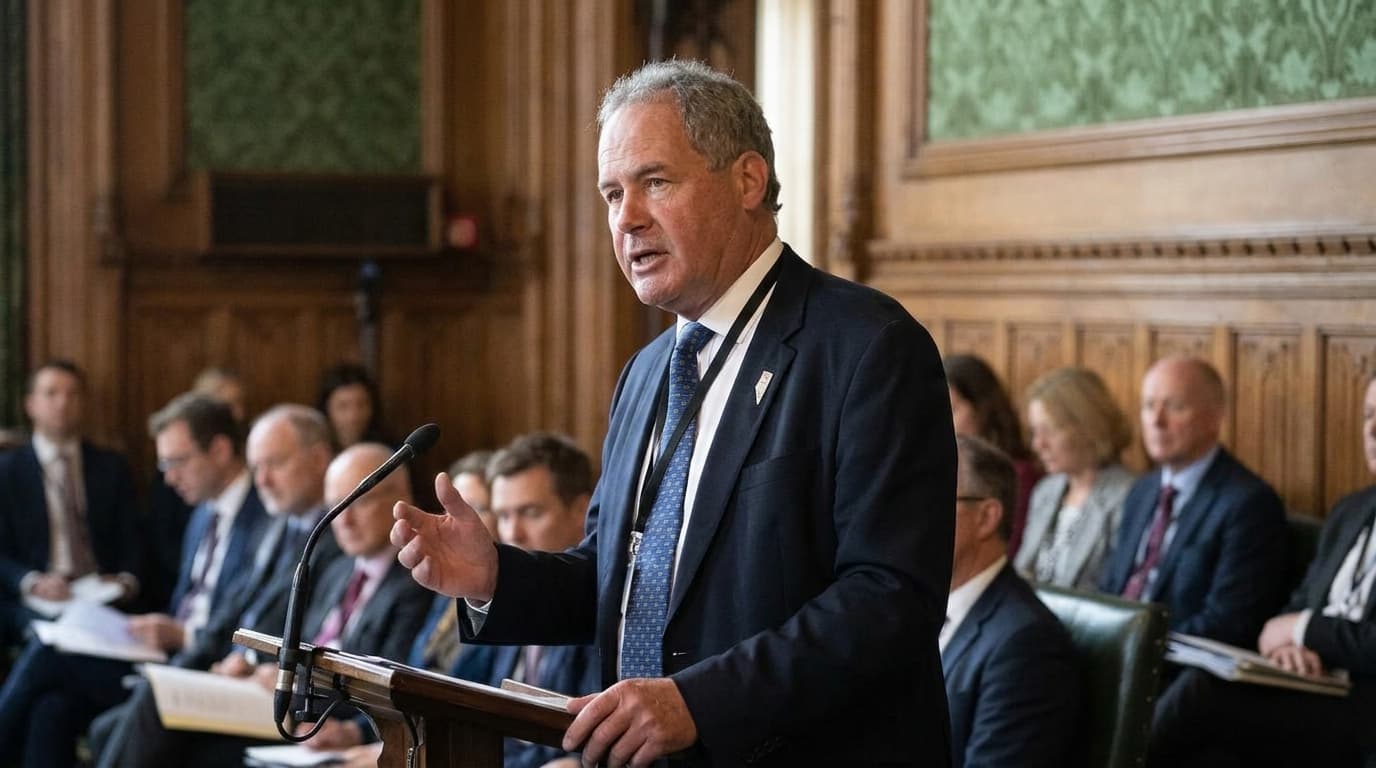
Bergman Responds to NCP’s Media Criticism
Dhaka Papers graphics
"I don’t want to impute motives to the NCP, but it is difficult not to conclude from its statement that the party is comfortable with a criminal justice system where evidence is unnecessary and people are locked up on allegations of crimes they did not commit. Noor is, of course, just one of very many people in this position right now."
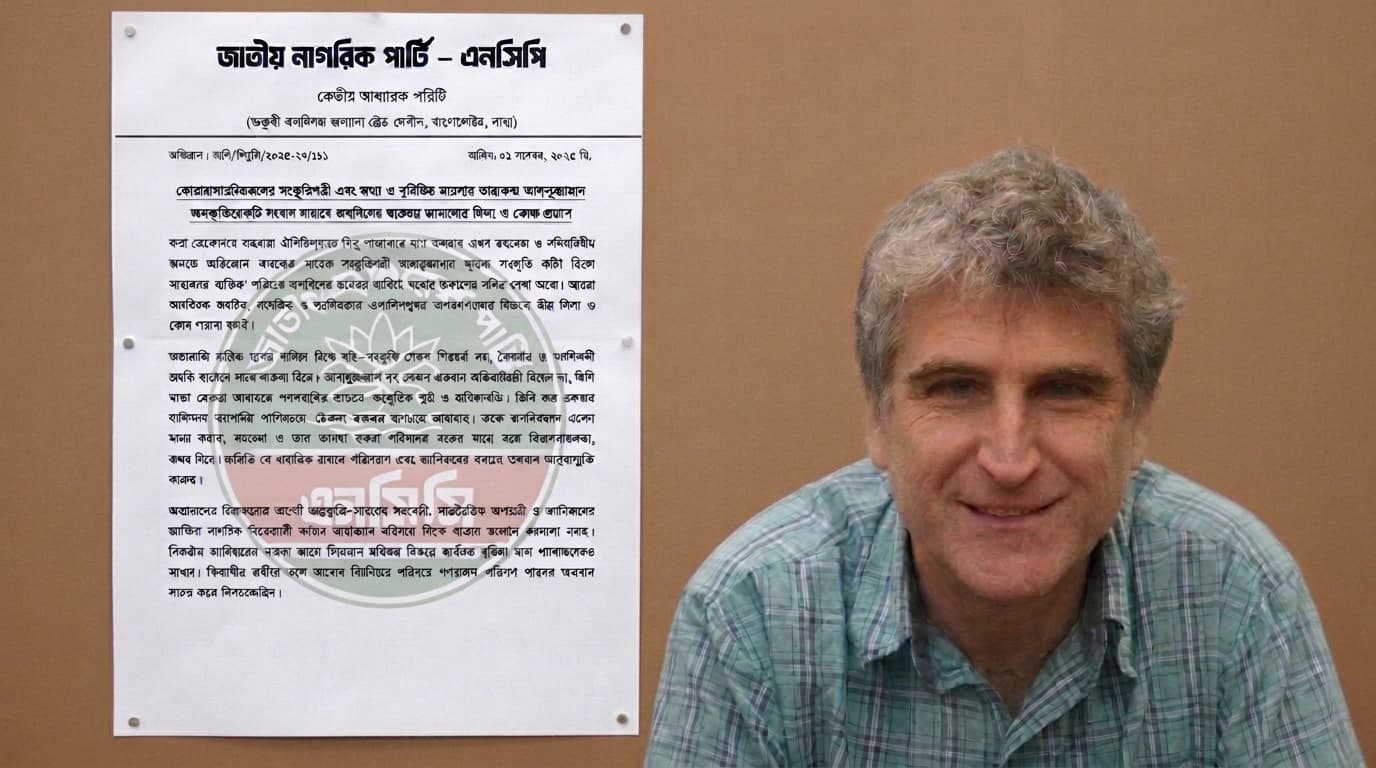
The National Citizen Party (NCP), in a statement on Sunday, criticized several Bangladeshi media outlets. The party alleged that "some media outlets, including Maasranga Television, have set a precedence by publishing birthday greetings for former culture minister Asaduzzaman Noor—imprisoned on charges of genocide against students and the public and of unprecedented corruption—identifying him as a cultural activist or cultural figure." The party characterised the role of these media outlets as "irresponsible, unethical, and malicious activity aimed at rehabilitating fascism."
In response, renowned journalist David Bergman posted a reaction on Facebook today, Monday. Dhaka Papers is reproducing it verbatim for its readers.
“The National Citizens Party (NCP) issued a statement yesterday condemning media outlets for marking the former Awami League MP, Asaduzzaman Noor’s 80th birthday. The statement said it was inappropriate for them to do so as he was imprisoned for allegedly “massacring” students and members of the public. It also accused him of allegations of “unprecedented corruption” and called him one of the “cultural pillars” of the “fascist system”.
Yes, it is true that Noor has been detained for over two years for alleged involvement in various July 2024 killings. Yet the NCP must surely know that no evidence has ever been made public linking him to the July shootings or killings. There is no incriminating video, no compromising intercepted phone conversation, no damning statement made by him, and no inculpatory CDR phone records. The one charge sheet filed against him, in a Badda murder case, contains, as I wrote in Prothom Alo yesterday, nothing, zilch, that connects him to the killing.
The NCP must know that in Bangladesh nothing is easier than making an allegation against someone, particularly anyone linked to the Awami League, and having them arrested and detained regardless of whether there is any evidence.
I don’t want to impute motives to the NCP, but it is difficult not to conclude from its statement that the party is comfortable with a criminal justice system where evidence is unnecessary and people are locked up on allegations of crimes they did not commit. Noor is, of course, just one of very many people in this position right now.
Bangladesh endured years of false allegations and arbitrary detentions under the Awami League. It is a real disappointment to find that the NCP, the party most vocal in its opposition to the Awami League, appears to be going down a similar path. Indeed, it seems to be a party completely incurious about the legitimacy of detention decisions even when those decisions are made by an unreformed police force and lower judiciary that have shown themselves over many years to be corrupt and politically compromised.
As for its claim of “unprecedented corruption”: the Anti-Corruption Commission has not brought any case against Noor. And the description of Noor as a “cultural pillar” of fascism, language with an odd echo of Stalinist denunciations, simply reflects ignorance of his long and varied acting career, which began in 1972 and cannot be reduced to support for the Awami League. To take one example, when the BNP was previously in power he was a regular and hugely popular actor in BTV dramas.
The NCP tries to give its criticism moral weight by claiming that presenting Noor positively in the media, “with a coating of humanity” as it puts it, is “an extreme betrayal of the blood of the martyrs, a mockery of the feelings of thousands of persecuted families, and part of a project to normalise fascism by concealing its terrible crimes.”
Yet since there is no evidence that Noor was involved in the killing or injuring of anyone, it is hard to see how any of this incendiary language – indeed in the second para the NCP appears to claim as fact that Noor was involved in “mass killing” - can be justified. There is something rather distasteful about the NCP invoking the grief of the families of the recently dead to support claims it cannot substantiate. Again, a practice uncomfortably reminiscent of the Awami League.
Bangladesh has been through years of unsubstantiated, politicised allegations against, and stigmatisation of, the Awami League’s opponents – often harnessing similar language relating to 1971 war victims to justify it. It would be a great pity if the NCP wants the country to go through the same thing again, with the targets reversed.
Of course, the NCP is not part of the government, and the prime responsibility for the continuing detention of Noor and others lies at the door of the Bangladesh Nationalist Party. It is, however, very unfortunate that the NCP seems so willing to back the BNP’s policy of arbitrary detention.
The NCP, and the BNP, should recognise a basic principle of criminal justice. The only people who should be detained and prosecuted for the July killings are those against whom there is real evidence of involvement in murder or attempted murder, as the criminal law understands those offences. Everyone else should be released. Making unsubstantiated, allegations against one’s political enemies is the very opposite of criminal justice.”
Your contribution keeps investigative journalism fearless, transparent, and accessible to everyone. To support us securely donate from anywhere.