Lured with Jobs, Trapped for Kidneys: Bangladeshis Allege Coercion in Lahore Trafficking Ring
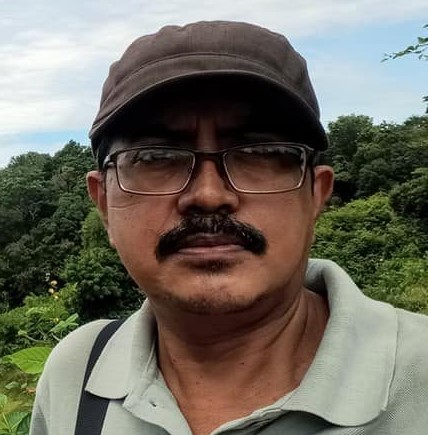
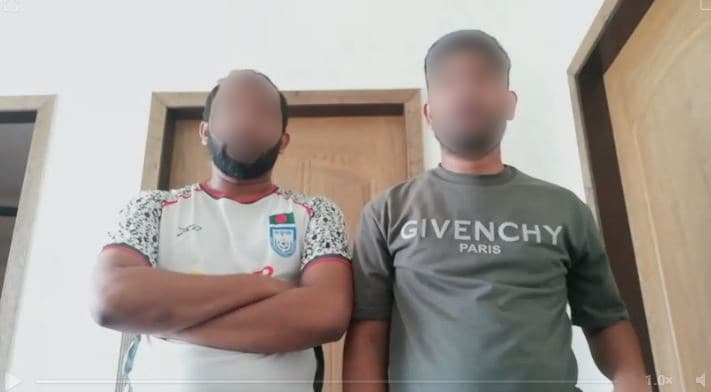
Victim Bangladeshi workers Mir Talha Jubaer Adnan and Mamun Mia.
Dhaka Papers spoke to three other individuals who shared stories similar to Rafiqul's. They alleged that the syndicate lured Bangladeshis to Pakistan with promises of high-paying jobs and then coerced them into kidney donation in exchange for promised payments. Overall, Dhaka Papers identified at least 10 Bangladeshi workers who alleged they had been coerced into donating or selling kidneys in Lahore.
Rafiqul Islam (30) is the son of a poor farming family in Narsingdi. He dropped out of school after completing eighth grade in 2008 to take responsibility for his struggling family. Since then, he worked various jobs but could not achieve financial stability. Hoping to change his fortune abroad, he traveled to Lahore, Pakistan last year through a broker. He was promised a monthly salary of $600 for an impressive-sounding position called "Medical Assistant" at a hospital. He was also lured with the promise that his income could reach a thousand dollars with overtime.
However, all of Rafiqul's dreams shattered within a month of arriving in Lahore. Speaking to Dhaka Papers, Rafiqul alleged that a gang kept him confined, describing his ordeal, "They kept me confined in an isolated room for a month. They subjected me to physical and mental torture. Later, in August last year, they forced me to donate a kidney."
Dhaka Papers spoke to three other individuals who shared stories similar to Rafiqul's. They alleged that the syndicate lured Bangladeshis to Pakistan with promises of high-paying jobs and then coerced them into kidney donation in exchange for promised payments. Overall, Dhaka Papers identified at least 10 Bangladeshi workers who alleged they had been coerced into donating or selling kidneys in Lahore.
Rafiqul told Dhaka Papers that before the surgery, he was told that 500,000 Taka would be deposited into his bank account. However, on the day of the operation, he was given only 50,000 Taka in cash. He was told that banking hours had ended. The remaining money was never paid.
"I was told that the money was ready and would be deposited into my account as soon as the bank opened," Rafiqul said. "But I never received any more money. I eventually managed to get away from the syndicate. I got my passport back and returned home in April this year."
"For fear of social stigma, I could not tell anything to my family, relatives, or friends," Rafiqul added.
He further stated that during his time in Lahore, he saw four to five other Bangladeshis in similar situations. He alleged that they were also confined and forced into kidney donation in exchange for promised payments through various false promises.
Kidney Trafficking: Bangladeshi Workers as Target Group
Following up on Rafiqul's allegations, Dhaka Papers conducted an investigation into reports of individuals being held captive in Lahore over the past year. Victims and investigators allege that the transplants were carried out using documents that falsely identified donors as relatives of recipients. Recently, two Bangladeshi workers lodged a complaint with the Lahore Police. This prompted concern within the Bangladesh Embassy.
During an operation, Lahore Police recovered the passports of the two Bangladeshi complainants, Mir Talha Zubayer Adnan and Mamun Miah. According to relevant sources, Zakir Hossen, the suspect, has been detained and is being interrogated.
Zakir Hossen is listed as the Chief Executive Officer of Zakir Traders (Private) Limited, a company registered in Pakistan. The company has been claiming to provide medical services to Bangladeshi patients in Pakistan. However, an investigation could clarify whether the company was linked to a human-trafficking and organ-trafficking network. There are allegations that forged documents were processed and attested through official channels in Bangladesh. The victims allege that these documents were used to support transplant-related paperwork that presented donors as relatives of recipients for procedures in Lahore.
According to the accounts of the two victims from Bangladesh, they were initially promised "good work opportunities," "high-paying jobs abroad," or "easy travel arrangements." Gradually, the syndicate trapped them by exploiting their visa status, travel arrangements, and financial hardship. At one stage, they were forced to undergo medical tests and pressured into kidney donation in exchange for promised payments.
In many cases, victims are told that selling a kidney will earn them anywhere from a few thousand to several hundred thousand Taka to eliminate their poverty. In reality, brokers and middlemen take a major portion of the promised money. Some victims face serious health risks after surgery, while others are deprived of medical assistance.
According to people familiar with the investigation, victims are often taken to hospitals under the guise of legitimate medical processes, while necessary legal permissions or ethical protocols are ignored secretly.
Following the political upheaval and change of government in Bangladesh after the July uprising, visa facilities for Bangladeshis in India have been restricted. For this reason, some Bangladeshi patients have increasingly sought medical treatment in Pakistan in recent years. According to investigators and observers, organ-trafficking networks may increasingly be shifting their operations to countries such as Pakistan and Nepal after facing greater scrutiny in India.
What the Victims Said
Talha, who filed a complaint with Lahore Police, informed Dhaka Papers via a video message that his home is in Arpara under Shalikha upazila of Magura district. His passport number is A0917****. He alleged that Md. Zakir Hossen brought him to Pakistan by promising a job as a patient caregiver. Later, his passport was withheld, and he was pressured into kidney donation. He claimed he was promised 500,000 Taka in return.
Talha said, "At one point, I was forced to consent under mental pressure. Later, I found out that fake documents were created showing me as a relative of the patient. In reality, I had no family or blood relationship with the patient."
He also made similar allegations in his FIR filed with Lahore Police. Similarly, Mamun Miah from the Amtali area of Moulvibazar Sadar upazila, whose passport number is A0148****, made identical claims in his complaint to the Lahore Police. He also appealed for assistance in returning to Bangladesh in a video message.
Lahore Police and Embassy Launch Investigation
Abu Kawser Titu, Personal Assistant to the Consular Officer at the Bangladesh High Commission in Islamabad, told Dhaka Papers that following the prompt action of the Lahore Police, the embassy is looking into the individuals named in the complaints. He said, "The embassy is working to provide humanitarian assistance. We are treating the matter with high priority."
He added that both the police and the embassy are investigating the matter separately. Zakir Hossen has been interrogated multiple times. His visa agent has also been summoned.
Lahore Superintendent of Police Hassan Billal also informed Dhaka Papers that they are investigating the entire matter. He added that the suspect is being interrogated. The passports of the two Bangladeshi complainants have been recovered and returned to them.
What International Law Says
This incident raises new questions regarding the safety of Bangladeshi workers seeking employment in Pakistan and the activity of broker syndicates. Under international conventions, organ trafficking is considered a serious criminal offense. The World Health Organization (WHO) and human rights organizations have long warned about this border-crossing crime.
Analysts emphasize that unilateral initiatives are insufficient; coordinated monitoring and strict legal measures are required between Bangladesh and Pakistan. Safe migration systems and social awareness are also essential, as many vulnerable individuals remain unaware that selling organs is a permanent health risk and a severe crime.
Under these circumstances, the allegations point to a broader challenge posed by transnational organ trafficking networks and the exploitation of vulnerable migrant workers, and addressing the problem is likely to require sustained international cooperation.