S. Alam Takes Dhaka and Washington for a Ride, Wheat Deal Costs Millions Extra

Dhaka Papers Graphics
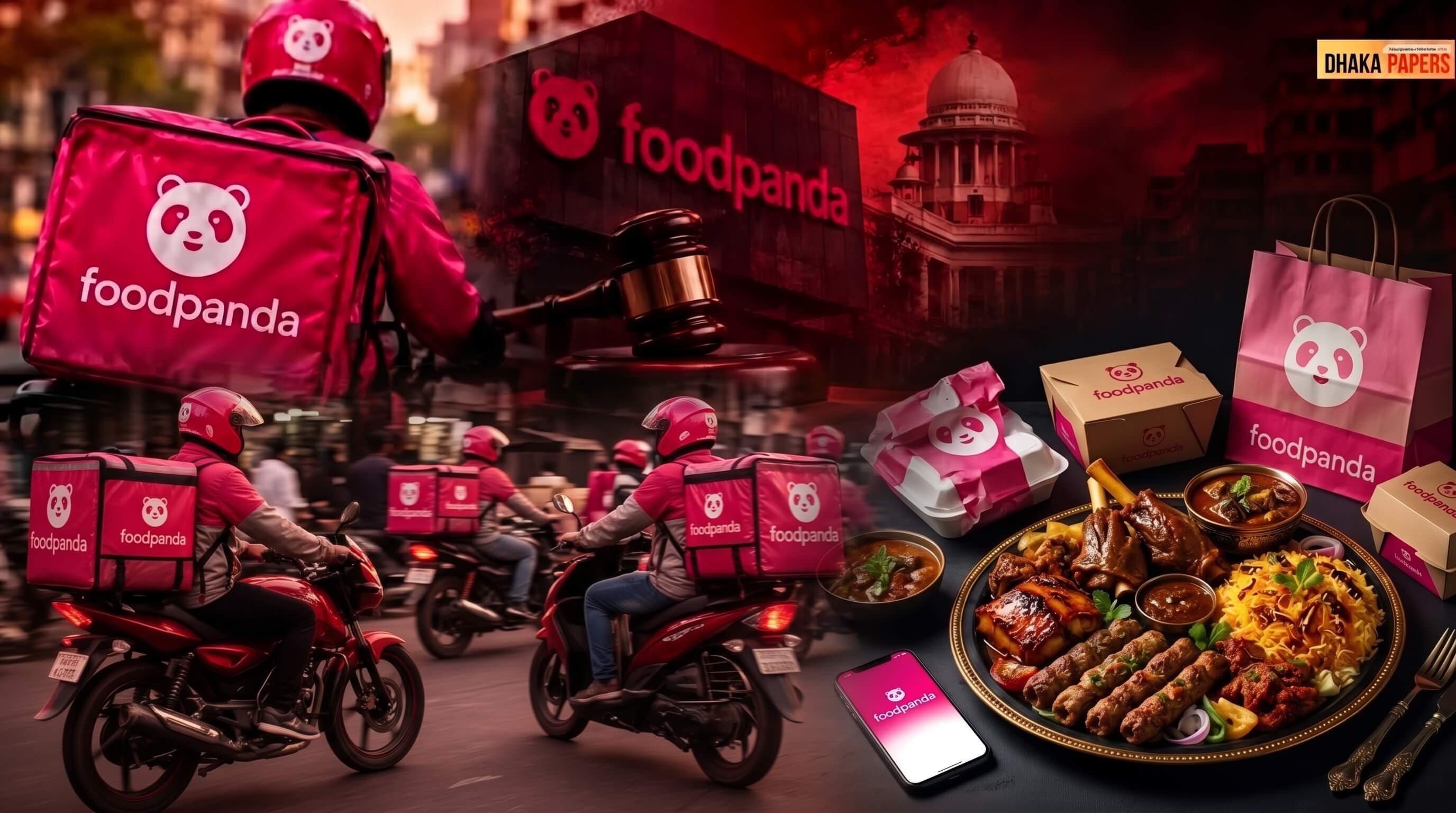
Bangladesh is buying US wheat under a G2G trade deal through Agrocorp International, a Singapore-registered, Indian-owned firm named in an S Alam money-laundering case, not a US company. At up to $70 a tonne above market rates, the deal could cost the treasury up to Tk 600 crore extra.
The Bangladesh government has signed a deal with the United States to narrow the bilateral trade deficit. Under the agreement, Bangladesh will buy 3.5 million tonnes of wheat from the US over five years, at 700,000 tonnes a year, through the Directorate General of Food on a government-to-government (G2G) basis. Out of the initial 700,000 tonnes, Bangladesh has already received 440,000 tonnes in two batches of 220,000 tonnes each, while the government has decided to award the remaining 260,000 tonnes to Agrocorp International.
Under the G2G process, purchases bypass open tenders in favour of direct contracts with a designated firm, which is required to be a company based in the exporting country. The Directorate General of Food, however, is not buying wheat from any US firm. Agrocorp International is registered in Singapore and owned by an Indian national. It is neither registered in the US nor owned by any American citizen. Buying through Agrocorp means both the commissions and freight charges on the wheat shipments are paid to the Indian-owned company.
An investigation found that Agrocorp dominated government food supply contracts throughout Sheikh Hasina's 16 consecutive years in power. On paper, it is an Indian-owned firm. Many in banking and trade, however, describe it as a "shell company" or proxy for S Alam Group, citing Agrocorp's role as supplier of nearly all food commodities to S Alam and Nabil Group.
Asked about the contract, economist Dr Khondaker Golam Moazzem, president of Knowledge Hub Institute, told Dhaka Papers, "It is not clear why the government gave the wheat purchase job to a controversial firm that worked with S Alam, a group facing money-laundering allegations. Agrocorp was supposed to be blacklisted. Giving it the work instead is astonishing."
S Alam Group took Tk 2.25 lakh crore in loans from Bangladesh's banking sector, both in its own name and through benami (undisclosed) entities, according to the latest report by the Bangladesh Financial Intelligence Unit (BFIU). From Islami Bank alone, S Alam and its close ally Nabil Group drew around Tk 1 lakh crore, the report says. Banking investigations have also identified major financial irregularities in Agrocorp's dealings with S Alam and Nabil Group. Multiple letters of credit (LCs) were opened for food imports, but goods did not arrive against several of them. Instead, according to those inquiries, the bank funds were routed via Bank of China and Agrocorp to the coal-fired power plant in Banshkhali, Chattogram, where they were presented as "Chinese investment".
Contract records show Agrocorp maintained its dominant position in state food imports under the interim government, just as it had during the previous Awami League administration. The wheat procurement programme was launched as part of a pledge to reduce the roughly $7 billion trade deficit with the US. The deal envisages payments of about $216 million, roughly Tk 2,600 crore, for wheat imports alone. Bangladesh is paying above international market prices for these G2G purchases, while a large share of the foreign-currency payments is routed through Singapore-registered Agrocorp as the intermediary.
What is in the food deals?
Several contracts have been signed between the Directorate General of Food and Agrocorp International. On July 27, 2025, the two parties signed the first major contract to import 220,000 tonnes of wheat, contract files show. On July 6, 2026, the directorate signed another contract for the new fiscal year to import 220,000 tonnes more. Bangladesh has already received all 440,000 tonnes from these two batches, and the government has decided to award the remaining 260,000 tonnes to Agrocorp as well—bringing the total volume to 700,000 tonnes.
The price of wheat was $302.75 per tonne in 2025 and rose to $322 in 2026—up to $70 a tonne above actual international market rates. At that maximum gap, the state treasury could incur up to Tk 600 crore in additional costs across the 700,000 tonnes. Because the purchases fell under a G2G arrangement, Agrocorp also received the contracts without posting any performance guarantee or security deposit.
S Alam and Nabil Group links
Outside public procurement, Agrocorp was also a major supplier to the private sector. Over the past decade and a half, the firm shipped large volumes of wheat, soybeans, crude edible oil, pulses, and other consumer goods to the Bangladeshi market. Over the past 16 years, S Alam Group, Nabil Group, and their benami firms prepared import documents worth thousands of crores of taka using Agrocorp's name, government and banking records show.
After taking control of the boards of seven banks and one financial institution, S Alam Group borrowed Tk 2.25 lakh crore against collateral worth only Tk 32,000 crore, the BFIU report said. Of that total, Tk 98,000 crore went to fake or shell companies, Tk 90,000 crore was drawn in the names of 43 firms, and Tk 37,000 crore moved through other indirect routes. Of the overall borrowing, nearly Tk 1 lakh crore came from Islami Bank alone. A large share of these funds was laundered to Singapore and other countries—under the cover of international trade—through LC fraud and trust accounts, the report says.
Banks controlled by S Alam, including Islami Bank, repeatedly opened LCs in Agrocorp's favour for food imports, banking investigation sources said. When those LCs matured, the importing firms failed to pay, leaving the banks to convert the unpaid dues into "forced loans". The sources said no goods arrived in Bangladesh against several of those LCs and the entire dollar amount involved in those transactions was allegedly laundered to Singapore, purportedly for imports. The funds later moved through S Alam's shell-company accounts at Bank of China in Singapore before returning home as foreign investment in the "SS Power Plant" in Banshkhali.
Agrocorp International was also named in a Tk 10,480 crore money-laundering case filed by the Anti-Corruption Commission (ACC), which identified the firm as a key channel for moving the funds. Banking and economic analysts say it was wholly inappropriate to award state food-import contracts, without proper due diligence, to a longtime associate of a group accused of misappropriating Tk 2.25 lakh crore and laundering money.
The government is now importing US wheat through a company named in a money-laundering case involving S Alam. Asked for the government's position, A M Imdadul Islam, public relations officer at the Ministry of Food, said, "We have no information about S Alam."
Silence from the US administration
A third-country company facing allegations of links to money laundering has maintained a dominant role in wheat supplies arranged under the bilateral trade deal, even though the G2G terms stipulate buying from companies based in the exporting country. To find out whether the US administration was aware of this, Dhaka Papers emailed the US Department of Commerce, the US Department of Agriculture, US Wheat Associates, and the US ambassador in Dhaka on September 18, 2026.
US authorities did not respond to the email. In the last week of October 2026, after the message was sent, Louis Dreyfus, a multinational company registered in the US, was brought into the wheat procurement process. Ultimately, the work order for the remaining 260,000 tonnes was not issued to Louis Dreyfus; the government instead decided to award it to Agrocorp despite the G2G supplier rules.
Those familiar with the process say transparency should have been ensured from the start in the deal to reduce the trade deficit. Instead, they say, favouring a single controversial intermediary has hurt the goal of balancing bilateral trade, while higher prices are adding hundreds of crores of taka to state spending. They also warn that dealing with the firm risks allowing an old money-laundering network to become active again.
What Jamaat and NCP said
Even during the current session of parliament, there has been no discussion on importing G2G wheat at higher prices. Asked about buying US wheat through an Indian-owned firm, Jamaat-e-Islami Assistant Secretary General Hamidur Rahman Azad said he would look into the matter and respond later, but he did not get back to Dhaka Papers.
Akhtar Hossain, an MP, member secretary of the National Citizen Party (NCP), and a member of the American Caucus, was also asked about the matter. He said he was unaware of it and would comment after checking the details, though he did not follow up with a response either.
__________________
Author: Editor, Dhaka Papers
[email protected]uthor: Editor, Dhaka Papers
Your contribution keeps investigative journalism fearless, transparent, and accessible to everyone. To support us securely donate from anywhere.