What Does Bangladesh Seek from the Mecca Defense Pact?

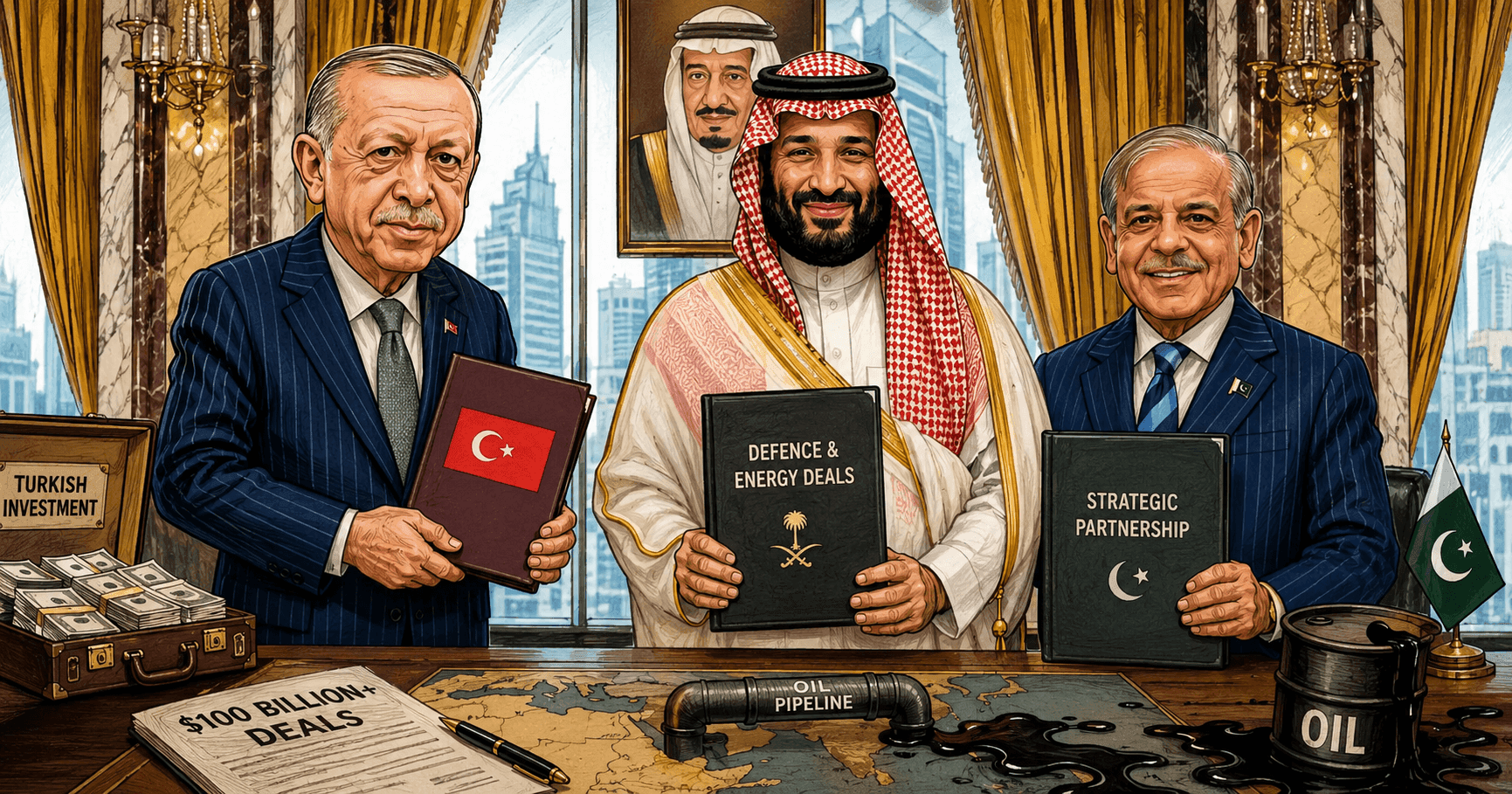
An analysis of the Mecca Defense Pact: Why Bangladesh risks economic destabilization, energy disruption, and foreign entanglements by joining the anti-Iran bloc.
After Israel launched large-scale military operations in Gaza, it also struck targets in Lebanon linked to Hamas. That conflict remains unresolved. Gaza has been reduced to rubble, with virtually no structures left standing. Israel's actions in Gaza are widely viewed as collective punishment of the Palestinian population.
Throughout this period, Saudi Arabia, Kuwait, Qatar, Jordan, Oman, and Turkey largely refrained from substantive intervention, limiting their response to counting the mounting death toll. Pakistan, meanwhile, remained unusually silent on the Gaza crisis.
As these events unfolded, the United States and Israel launched attacks on Iran, citing Tehran's alleged nuclear weapons capability. That offensive has fundamentally altered global geopolitical calculations.
Iran responded with retaliatory strikes against US allies in the Middle East and countries hosting US military installations. Iran did not target civilian sites; its strikes were directed at military facilities used by the US to launch attacks against Iran. As a result, Saudi Arabia, Kuwait, Bahrain, Qatar, Oman, Jordan, the United Arab Emirates, and Israel, all became targets of Iranian retaliation.
Even advanced US air defense systems proved unable to fully neutralize Iran's offensive. Qatar's LNG infrastructure sustained severe damage, significantly reducing the country's export capacity. Saudi Arabia's Aramco, one of the world's largest oil refining complexes, was also heavily hit.
Despite the intensity of the assaults, Iran has remained resilient. Its use of hypersonic missiles and advanced drones has played a significant role in countering US and Israeli aggression, alongside certain technological support from China, according to some analyses. These systems have challenged US-Israeli defense capabilities.
The United States has a track record of questionable reliability toward its allies. South Korea, for instance, had been equipped with US-provided THAAD air defense systems. When Iran began striking US interests in Israel and the broader Middle East, Washington redeployed those THAAD batteries from South Korea to the conflict zone. This left South Korea's airspace effectively exposed.
The deeper irony is that the very threat of North Korean aggression—used for years to justify US military presence and heavy defense spending in South Korea—has so far produced no actual North Korean military action.
Even major military powers face severe operational constraints across multiple simultaneous fronts, straining air defense networks, weapons inventories, and logistics. The Iran war further illustrates this point. Iran has absorbed extensive aerial and ground strikes, suffering severe damage to its military and physical infrastructure.
However, its state and military apparatus have not been wholly dismantled. On the contrary, Iran has mounted effective counter-strikes, seriously challenging both Israeli and US forces in the region. Earlier predictions that Iran would be "flattened" now appear inconsistent with the current reality.
The US-Iran War and Defense Industry Profits
The US war against Iran, launched on February 28, 2026, offers a clear illustration. Iran may have earned some recognition for its tactical retaliatory strikes and its temporary diplomatic gains in ceasefire talks. Ultimately, however, its core infrastructure has been devastated by US and Israeli missiles and bombs. Hundreds of civilians—including children—as well as senior military and political figures, have been killed. Iran has derived no net advantage from the conflict.
Global markets have been disrupted. US consumers experienced gasoline prices above $4 per gallon for the first time since 2022. By August 2026, the average price had reached $4.25 per gallon, the highest level since 2022, accompanied by rising inflation. Other global economies have also suffered from the war's secondary effects.
Amid the broader downturn, only the US defense industry has registered record profits. The top five US defense contractors—Lockheed Martin, RTX, Northrop Grumman, General Dynamics, and Boeing—have emerged as the primary financial beneficiaries of the Iran war, securing both immediate market gains and long-term production contracts.
Corporate Gains from the Conflict
Pre-War Gains:
Defense contractors began profiting even before 'Operation Epic Fury' was formally launched against Iran. First-quarter earnings reports underscore this trend.
RTX reported Q1 2026 revenue of $22.1 billion—an 8.7% year-over-year increase.
GE Aerospace posted even sharper growth, with Q1 revenue of $11.61 billion—a 24.6% rise.
Northrop Grumman reported Q1 revenue of $9.88 billion and expanded its manufacturing footprint by over 2 million square feet to meet surging demand.
Notably, both Northrop Grumman and RTX announced 7% dividend increases in May 2026, suggesting that management views this demand surge as a long-term structural shift.
According to market reports, the five major US defense contractors gained approximately $120 billion in market capitalization during the conflict.
As tensions escalated into direct military confrontation, defense stocks rallied. On the first trading day following the strikes, Northrop Grumman rose roughly 6%, RTX gained nearly 5%, and Lockheed Martin advanced about 3%. By mid-August, however, share prices had moderated somewhat, though they remained up 12–18% year-over-year.
The conflict has also generated new demand for advanced missile defense systems among rival states in the region. Washington approved over $16.5 billion in potential arms sales to Middle Eastern countries.
In May 2026, Secretary of State Marco Rubio invoked an emergency waiver to approve $8.6 billion in expedited sales to Qatar, Kuwait, the UAE, and Israel. Later reports indicate that the total value reached $25.8 billion. In addition, Saudi Arabia has requested 400 THAAD interceptors, though that request remains pending.
Demand significantly outstrips production capacity: the UAE requested 600 PAC-3 MSE interceptors, Kuwait 500, and Qatar 300. Lockheed Martin's annual production capacity stands at only 650 units. This wartime experience has effectively transformed theoretical defense planning into urgent, funded operational requirements.
While corporate executives celebrate record profits, ordinary US citizens bear the cost. On June 24, 2026, the Trump administration requested $70 billion from Congress to cover war expenses, on top of the $867 billion military budget for the current fiscal year. The final military budget for fiscal year 2026 stands at $892 billion, including an additional $25 billion in war-related allowances.
The Mecca Defense Pact and Its Anti-Iran Orientation
The Mecca Defense Pact—signed by Turkey, Saudi Arabia, and Pakistan—functions essentially as an anti-Iran military alliance. Saudi Arabia, Turkey, Pakistan, Kuwait, Qatar, Jordan, Oman, and the UAE all face direct or indirect threats from Iran. Iran has already struck Saudi Arabia's Aramco refinery, Qatar's LNG infrastructure, and US bases in the region.
The alliance's primary objectives are to counter Iran's missile and drone capabilities, break Iran's influence over the Strait of Hormuz, and safeguard the security of US-aligned states. Despite any religious overtones, the alliance remains fundamentally geopolitical and military in character, with Iran as its central focus. Iran continues to exercise effective control over the Strait of Hormuz, which has reduced oil tanker traffic by approximately 30% below normal levels.
China maintains a strategic partnership with Iran and imports oil from Iran. Beijing is unlikely to support Pakistan within any explicitly anti-Iran coalition. Instead, China would probably advise Pakistan to avoid confrontation with Iran. Should Pakistan directly engage Iran, Beijing might either distance itself or attempt to mediate, prioritizing its own economic and energy interests.
Russia, likewise, is a close ally of Iran and shares common ground with it in opposition to Western influence. Moscow is unlikely to endorse the Mecca Defense Pact, given that it includes Turkey (a NATO member) and Saudi Arabia (a US partner). Russia would more likely reinforce its military and technological assistance to Iran and pressure Pakistan to withdraw from the coalition.
Both China and Russia would likely align with Iran and work to dissuade Pakistan from joining the alliance. Neither would stand with Pakistan against Iran.
What Would Bangladesh Gain from the Mecca Defense Pact Beyond Iran's Hostility?
Among the core signatories of this pact, Saudi Arabia has already faced direct Iranian strikes. Although Iran has not attacked Turkey, bilateral relations have never been cordial, partly because Turkey is a NATO member and part of the Western-led alliance system.
An alliance built around Turkey, Saudi Arabia, and Pakistan would likely seek to appeal to religious sentiment in Muslim-majority countries. Yet none of these three states have taken a strong, consistent stance in support of Palestine. Moreover, Saudi Arabia and Turkey remain close partners of the United States, and Saudi Arabia is directly in Iran's missile crosshairs. In this context, the alliance would be inherently anti-Iran and would strive to position itself as a trusted partner of the West.
While Pakistan enjoys strong bilateral ties with China, should the Mecca Defense Pact openly confront Iran, Beijing would not side with Islamabad. A counterbalancing global bloc—comprising China, Russia, and Iran—would likely emerge in opposition to the Mecca Defense Pact.
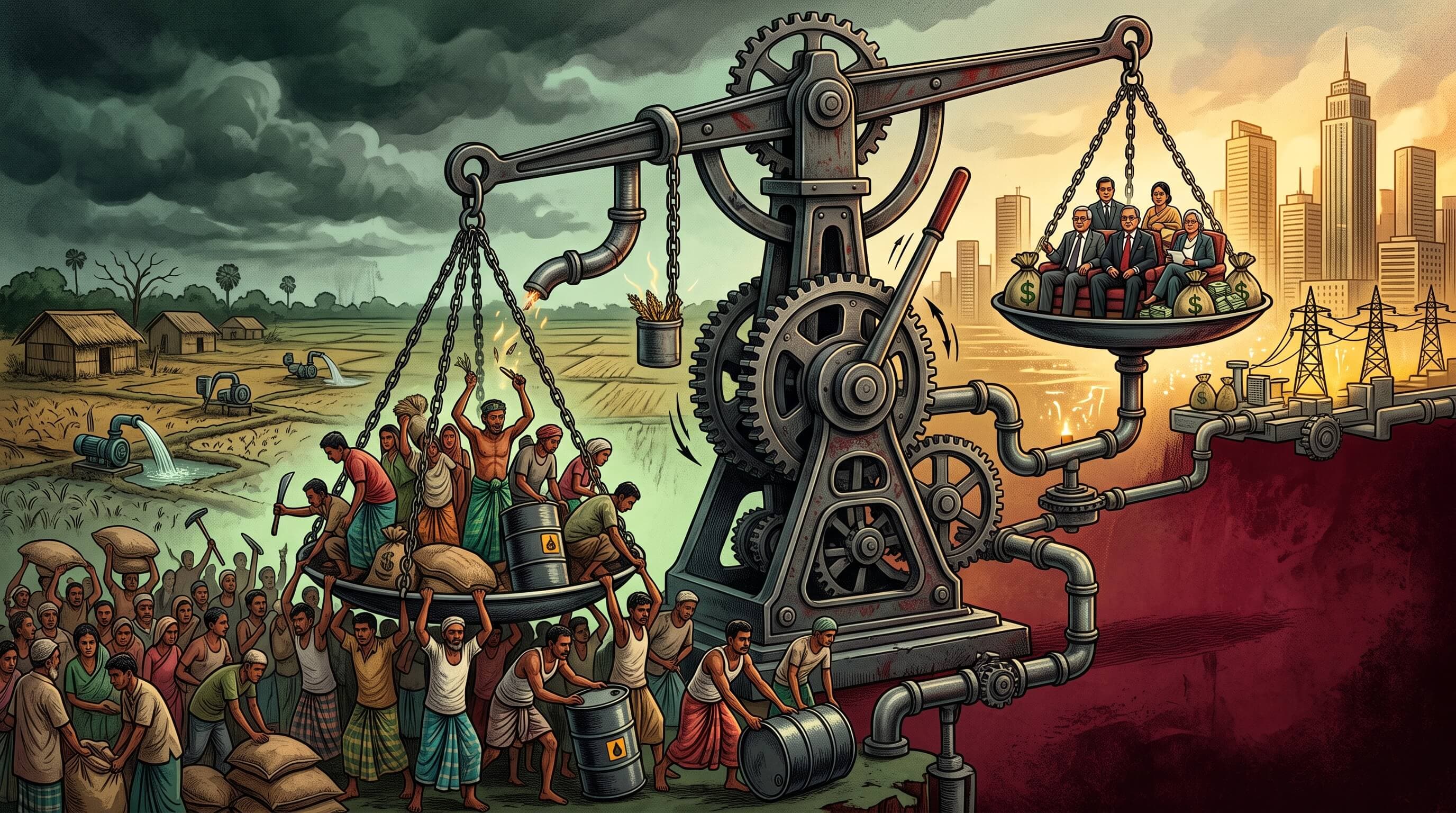
Bangladesh shares no direct geopolitical dispute with Iran, though it relies heavily on the Strait of Hormuz for vital energy supplies. While Pakistan and Turkey share direct land borders with Iran, and Saudi Arabia sits directly across the Persian Gulf, their strategic priorities diverge fundamentally from Bangladesh's. The Mecca Defense Pact's principal adversary is Iran. Should Iran block energy shipments through the Strait of Hormuz to hostile states, Bangladesh's economy would be severely affected.
Moreover, if Iran were to regard Bangladesh as an enemy state and launch even a limited missile strike, Bangladesh lacks both the defensive capability and the resilience to absorb such an impact.
For Bangladesh, entering this great-power contest would be self-defeating. Bangladesh has historically maintained a peaceful posture in international affairs; it did not adopt an aggressive stance in the past, nor does it possess the capacity to do so now.
Entanglement in this conflict would expose Bangladesh to severe military, political, and economic destabilization—making this a fundamental question of national survival rather than nationalist sentiment. Bangladesh has nothing substantive to gain from the Mecca Defense Pact.
Joining such an alignment could compel Bangladesh to spend billions of dollars on Turkish drones—equipment that would not by itself enable offensive operations against any adversary. For a smaller state, relying on such drones, missiles, or imported weaponry as a guarantee of survival is unrealistic. Bangladesh must prioritize modern education and foster a knowledge-based society.
That would not weaken Bangladesh; it would strengthen it. By educating thousands of scientists and engineers, Bangladesh could build its global influence and stature far more sustainably. In today's world, military arsenals alone do not ensure national security—as demonstrated when Iran struck Saudi Arabia and Israel despite their advanced defenses.
NATO has failed to fully protect Ukraine. Fighting another power's conflict constitutes a proxy war. In the contemporary era, states engage in proxy warfare only when their ruling governments themselves function as proxies. Bangladesh's leadership must avoid this strategic misstep: Dhaka can ill afford to risk direct confrontation with Tehran or antagonize Beijing and Moscow.