Indian Rice Coming via Vietnam – Government to Lose Tk 60 Crore
The government took the decision specifically to reduce reliance on New Delhi. But the contract with Hanoi allows Vinafood-2 — the Vietnamese state supplier — to source the rice from India or Thailand if it wishes. So the question is...
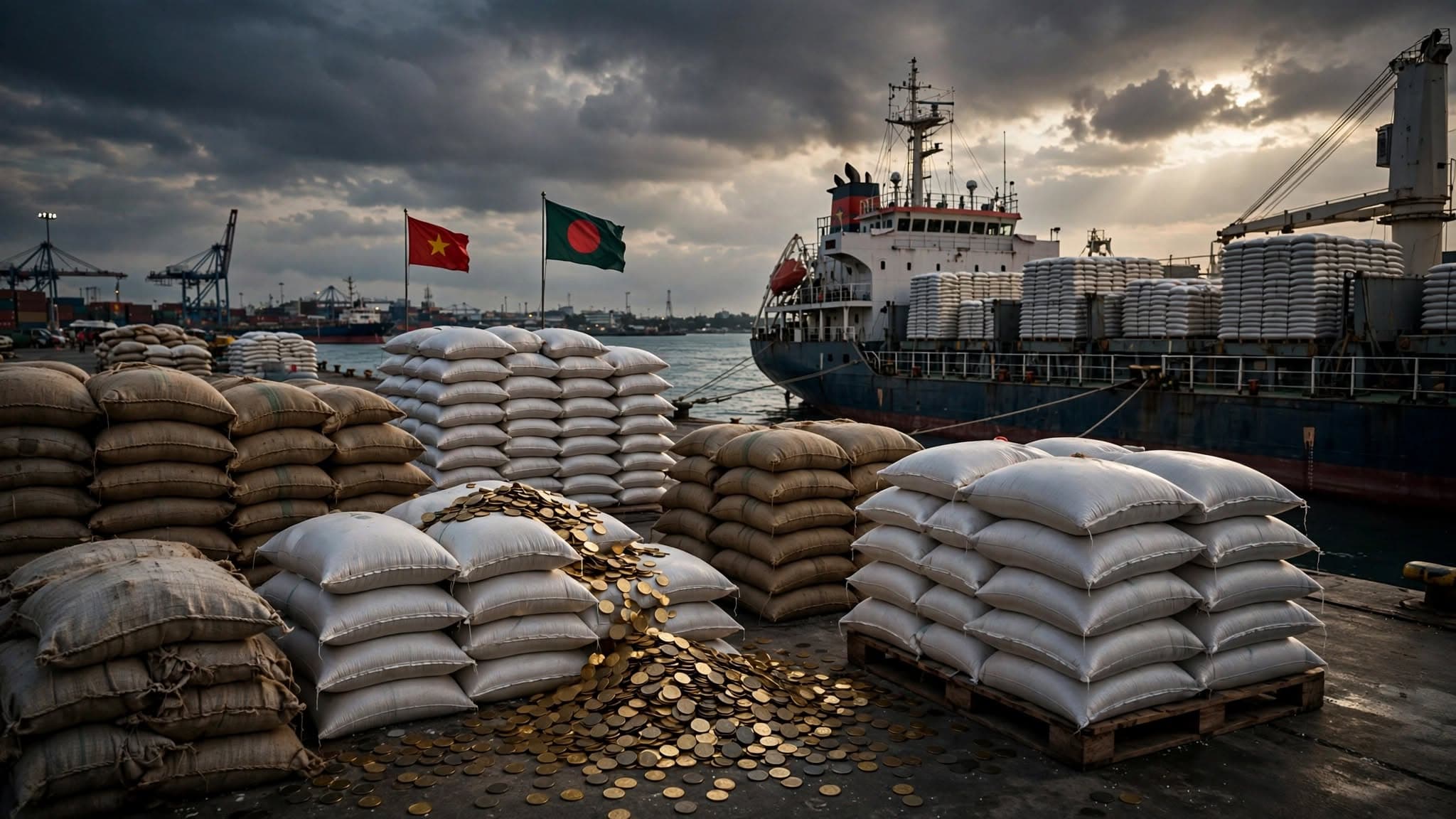
To cut its dependence on India, Bangladesh is buying 100,000 tonnes of parboiled rice from Vietnam through a government-to-government (G2G) deal, paying nearly $60 more per tonne. That means an extra cost of about Tk 60 crore for this shipment.
The government took the decision specifically to reduce reliance on New Delhi.
But the contract with Hanoi allows Vinafood-2 — the Vietnamese state supplier — to source the rice from India or Thailand if it wishes.
So the question is: will Bangladesh end up importing Indian rice via Vietnam, defeating the very purpose of reducing dependence on India?
The contract was signed on 17 August between the Directorate General of Food, under the Ministry of Food, and Vinafood-2, a Vietnamese state-owned enterprise. The price was set at $416 per tonne, putting the total government outlay at roughly Tk 515.04 crore, or Tk 51.50 per kg.
The deal allows Vinafood-2 to procure the rice from any country it finds convenient — India and Thailand are explicitly mentioned.
With Indian parboiled rice (5% broken) currently trading internationally at $360–$375 per tonne, a direct purchase from India would have saved the government at least $50 per tonne. Since the contract permits Indian sourcing, Vinafood-2 has good reason to buy cheaper Indian rice and ship it to Bangladesh. Shipping costs from India would also be lower than from Vietnam.
Vinafood-2's Track Record in Bangladesh
Vinafood-2 is no stranger to controversy in the global rice trade. The Vietnamese state exporter has faced multiple allegations of irregularities, corruption, and supply of poor-quality grain in various countries.
Its biggest scandal came in the Philippines, where investigators uncovered large-scale bribery, tender manipulation, and embezzlement linked to rice-procurement contracts with the National Food Authority (NFA).
The Vietnamese government launched inquiries and took disciplinary action against the company's top officials over the affair.
Bangladesh, too, has had a bitter experience with Vinafood-2. In 2017, the government urgently imported rice and wheat from the firm under G2G arrangements. When the shipments arrived at Chittagong port, several consignments were found to contain substandard, rotten, or excessively moist grain. Laboratory tests by the food directorate flagged moisture levels above acceptable limits, posing a spoilage risk.
The company allegedly doctored international shipping documents to pass off wet, poor-quality grain.
The Old Syndicate Behind the Scenes
According to documents from the food and energy sectors, Miah Sattar and his brother Mohammad Sohel's firm, National BD Electric, has served as Vinafood-2's local agent in Bangladesh. Whether National BD Electric is still the agent for the August contract, however, remains unclear, as the deal mentions a local agent but does not name any company or individual.
The same Sattar–Sohel group was previously involved in overpriced wheat imports from Russia. The food directorate bought wheat at inflated rates from Prodintorg, a Russian state-owned enterprise, for which National BD Electric was the local intermediary. The group has also been accused of lobbying to push the costly VVER-1200 reactor model into the Rooppur nuclear project.
Their involvement goes beyond food. In the gas sector, the Sattar–Sohel syndicate represents Gazprom, Russia's state-owned energy giant, in Bangladesh.
While the domestic firm Bapex used to spend Tk 60–80 crore per well, Gazprom was awarded contracts worth Tk 160–180 crore per well — without any open tender.