Russian Oil in Cuba: The Intrigue of Trump’s Diplomacy
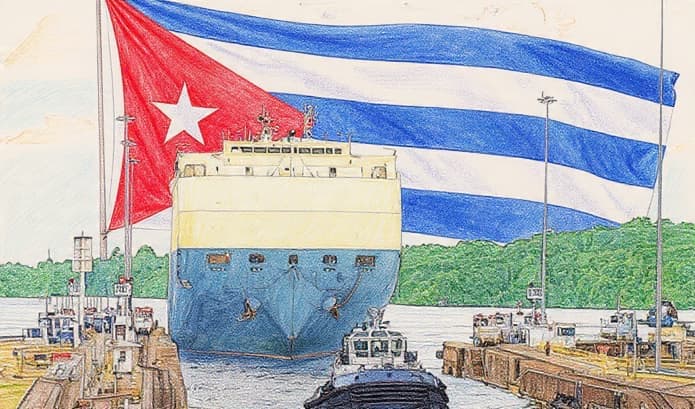
Sketch: AI
Reports indicate that the World Health Organization (WHO) warned of a near-total collapse of emergency hospital services, pushing the crisis to the brink of a humanitarian disaster.
The arrival of a Russian oil tanker in the calm blue waters of the Caribbean has ignited a new geopolitical drama involving Cuba, Russia, and the United States. The vessel, named ‘Anatoly Kolodkin,’ carries more than just 100,000 tons of crude oil; it represents a temporary lifeline for a sinking economy, a significant challenge to the efficacy of U.S. sanctions, and a vivid example of Donald Trump’s unpredictable foreign policy.
To understand this event, one must look beyond the cargo. It requires an analysis of the complex equations involving power, politics, and a deepening humanitarian crisis.
According to the BBC, the current situation in Cuba is nothing short of a catastrophe. Since last January, the United States has effectively imposed an oil blockade that has paralyzed the country’s economy and daily life. This began following the detention of Venezuelan President Nicolás Maduro by U.S. forces. Maduro was Cuba’s primary energy supplier, and with his removal, the flow of subsidized oil to the island ceased.
The Trump administration leveraged this opportunity to intensify Cuba's isolation, threatening heavy tariffs on any country supplying oil to the island. Consequently, Cuba plummeted into its worst energy crisis since the Cold War. Nationwide blackouts, a standstill in transportation, and the suspension of industrial production became daily realities.
Reports indicate that the World Health Organization (WHO) warned of a near-total collapse of emergency hospital services, pushing the crisis to the brink of a humanitarian disaster. The U.S. policy was clear: use economic pressure to force the communist government in Havana to its knees or trigger its downfall.
However, just as the pressure reached its peak, Donald Trump made a startling comment. Hours before the Russian tanker entered Cuban waters, he told reporters that he had "no problem" with Russia providing oil to Cuba. His reasoning was that "people need to get food or oil on boats to survive." This statement was a sharp reversal of his administration's rigid stance; only a week prior, the Treasury Department had included Cuba on the sanctions list for Russian oil.
Trump’s shift can be viewed through several lenses. First, it may be a characteristically impulsive decision lacking a long-term strategy. Second, it could be a shrewd political maneuver. By citing humanitarian concerns, he may be attempting to soften his international image while simultaneously attacking the Cuban government as "corrupt" and "finished." This sends a message that one shipment of oil will not solve Cuba’s fundamental problems and that his administration will maintain overall pressure.
The third and most significant possibility is that Trump realized a total blockade could backfire.
An extreme humanitarian crisis would not only draw global condemnation but could also push Cuba closer to U.S. adversaries like Russia and China. By quietly permitting this shipment, he may be attempting to avert such a scenario.
Strategically, Russia has gained the most from this development. While the Kremlin labeled the shipment "humanitarian aid," the geopolitical motive is transparent. It has long been Russia's policy to demonstrate presence and commitment to allies within the U.S. sphere of influence in Latin America. By aiding Cuba, Russia proved it stands by its friends during times of crisis.
Kremlin spokesperson Dmitry Peskov stated, "It is our duty to help our Cuban friends." Successfully delivering oil despite U.S. sanctions is a symbolic victory for Moscow, signaling to the world that U.S. embargoes are not invincible. Furthermore, Peskov’s claim that the matter was "discussed in advance" with U.S. authorities hints at back-channel understandings between the two powers, adding another layer of complexity.
For the government of Miguel Díaz-Canel, this shipment is a major victory and a momentary reprieve. They are promoting it as a success in "breaking" the U.S. blockade, which helps restore the government’s image domestically. While the oil may temporarily power the grid and transport sectors, it is not a permanent fix.
The Cuban economy remains fragile due to post-pandemic tourism declines and internal mismanagement. Until a stable energy source is secured and economic reforms are implemented, such crises will recur. Meaningful progress with the Trump administration also remains unlikely, as Washington’s conditions for political reform are unacceptable to Havana.
The arrival of the Russian tanker is not merely a commercial transaction. It is a move in a complex geopolitical chess game where every side is seeking an advantage. The Trump administration is applying pressure while trying to avoid blame for a humanitarian disaster.
Russia is expanding its influence and challenging U.S. hegemony. Caught between these powers, Cuba is fighting for survival. This single ship may temporarily dispel the darkness in Cuba, but the country’s political and economic horizon remains clouded.