Are America's Soviet-era old guard the world's last capitalist generation?
Student debt, no healthcare, and a $7.25 minimum wage have pushed a generation of Americans toward socialism. Inside the movement reshaping US politics.
The rise of the progressive current in American politics over the past two decades is not merely an electoral phenomenon—it is the political manifestation of capitalism's internal crisis. The 2008 financial meltdown, extreme inequality, healthcare failure, and the fundamental questions raised by the younger generation—these four issues now underpin a movement that is shaking American politics to its core.
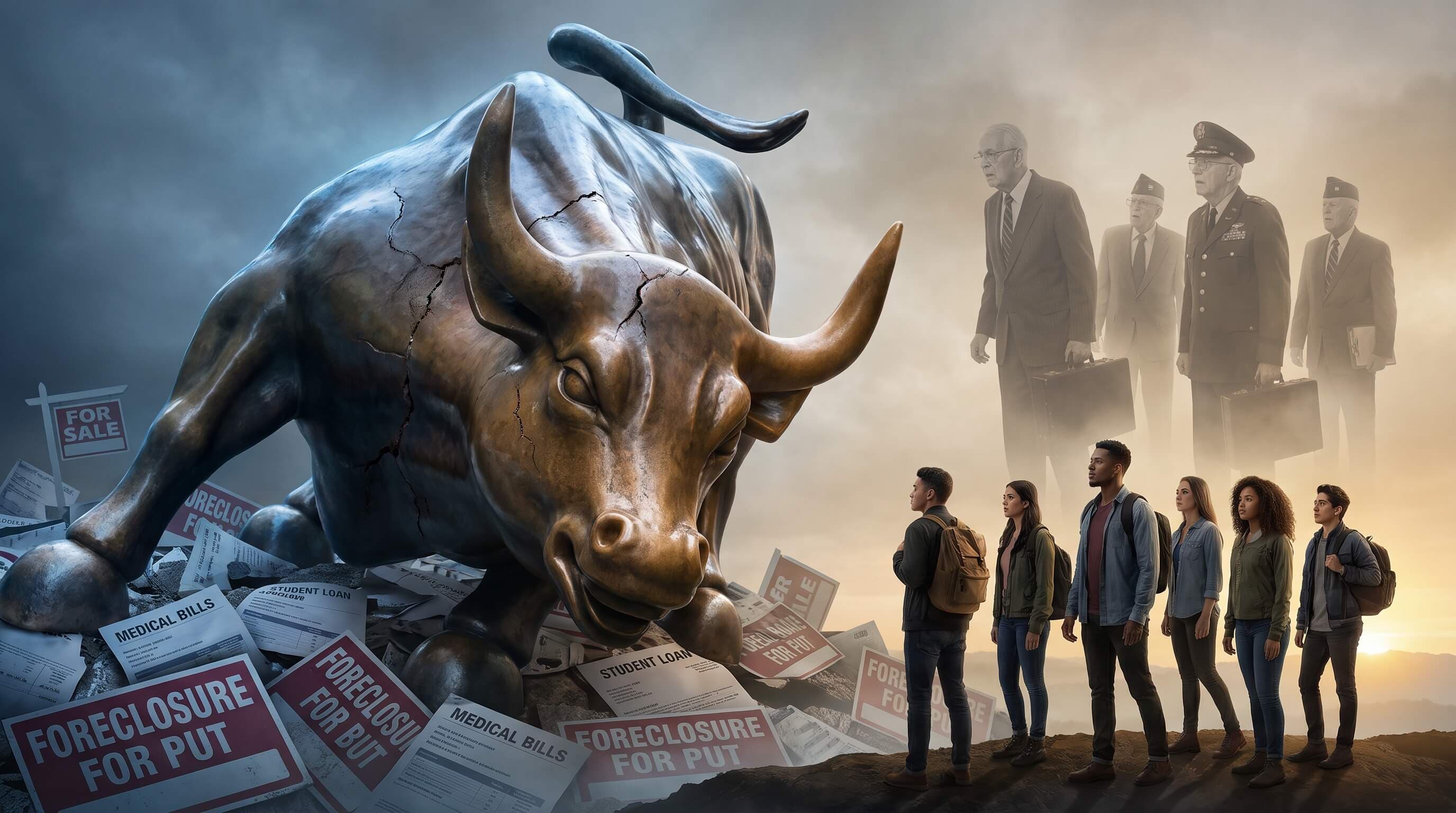
The 2008 recession laid bare the liberal mask of capitalism. The global financial crisis of that year was a watershed moment. In the reckless gambling of banks and Wall Street, over eight million Americans lost their jobs, and nearly four million homes were foreclosed, yet the government approved a seven hundred billion-dollar bank bailout package—paid for by taxpayers. There was no comparable assistance for ordinary people.
This disparity led, for the first time, to a fundamental question in the minds of the American public: "Whose side is the state really on?" From this question emerged the Occupy Wall Street movement and the slogan "We are the 99%"—the first mass articulation of capitalism's legitimacy crisis.
The wave of progressive support that has risen around Bernie Sanders is unprecedented. Sanders's extraordinary popularity in the 2016 and 2020 presidential primaries proves that a deep rift has opened in the foundation of American society. Sanders brought into the mainstream proposals such as "Medicare for All," free public college and university, a fifteen-dollar minimum wage, and Wall Street regulation.
In 2016, he won over seventy percent of voters under forty-five—far more than Hillary Clinton. His campaign politically energized millions of young people for the first time—those for whom Reagan-era "trickle-down" economics and Cold War fear-mongering are entirely ineffective.
It seems that the capitalist dream has died among America's younger generation. The reality of Millennials and Gen Z is fundamentally different from that of previous generations.
As of 2023, U.S. student debt has exceeded 1.7 trillion dollars, with the average graduate carrying thirty-seven thousand dollars in debt. Housing prices and rents have soared, while the minimum wage remains at $7.25—unchanged since 2009. Burdened by debt before their lives even start, facing homelessness, and deprived of medical care due to a lack of health insurance—this generation has seen the true face of capitalism's "freedom." In a 2021 Gallup poll, forty-six percent of those aged eighteen to thirty-four viewed socialism positively, while only forty-five percent viewed capitalism positively. This marks a generational break in ideology.
In the new healthcare policy framework put forward by Abdul El-Sayed, the lash of capitalist exploitation can no longer be overlooked. Dr. Abdul El-Sayed, an Egyptian-American physician, is an important theorist and organizer of this movement.
His book, "Medicare for All: A Citizen's Guide," proves that the progressive current can offer not just criticism but concrete policy proposals. Currently, twenty-eight to thirty million people in the United States are completely uninsured, and over forty million more are underinsured. Every year, forty-five thousand people die due to lack of medical care—an unimaginable figure for a "developed" country. El-Sayed's argument is clear: by eliminating insurance company profits and administrative waste, a single-payer system would reduce overall costs and provide care for everyone. His "Medicare for All" proposal—which he also put forward in his 2018 Michigan gubernatorial campaign—is grounded in reality.
A new moral stance against corporate politics is gaining strength. Leaders like AOC, Ilhan Omar, and Rashida Tlaib have rejected corporate PAC money and run their campaigns on grassroots donations of under two hundred dollars. This proves that genuine representation of the people is possible if the political economy can be changed. This is the most effective resistance against corporate lobbying and the dominance of money in the post-Citizens United era.
Yet this movement faces real obstacles: tensions between progressives and the moderate wing of the Democratic Party, fierce opposition from Republicans, bias in the mainstream media, and the internal procedural barriers of the DNC. But the post-2008 crisis, the political consciousness of the young, and the courage of progressive policymakers will together shape the future of American politics. The question is no longer "Is socialism possible?" The question now is "Can capitalism as it exists today survive?"