The Red Star of July in the Indian Sky
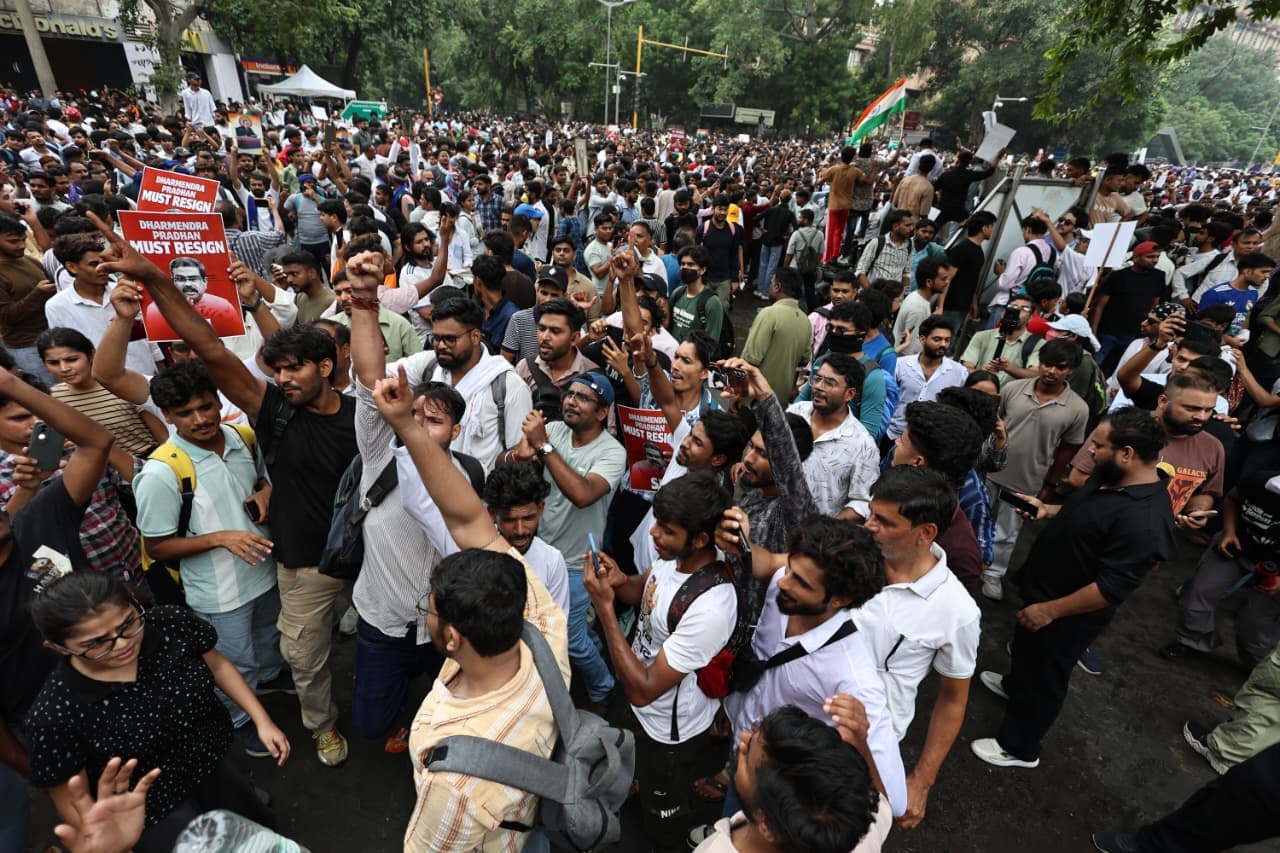
Independent India’s largest mass movement hits New Delhi. Protesters breach heavy barricades as the massive student-led march reaches the gates of Parliament. Yielding to pressure, the central government sits with the Cockroach Janata Party.
Today is July 20. Exactly two years ago on this very day, the July movement in Bangladesh was at its peak, with state forces launching severe attacks on students and citizens. Fast forward two years, and the streets of New Delhi have witnessed what organizers and supporters describe as the largest mass movement in independent India. The momentum of the July uprisings in South Asia appears to have crossed borders, fueling a massive new wave of protests across India.
Following the widespread leak of the NEET medical entrance question paper, protesters initiated a hunger strike under the banner of the Cockroach Janata Party, demanding the resignation of Education Minister Dharmendra Pradhan. From that platform, a call was made to lay siege to the Indian Parliament. Voices within opposition political circles point out that the demonstrations are no longer limited to students; they are rapidly turning into a broader anti-government movement aiming to oust the Modi-Shah regime.
Amid the ongoing agitation, Prime Minister Narendra Modi reportedly left the Parliament just as its Monsoon Session commenced today. Leader of the Opposition and AICC President Mallikarjun Kharge came down heavily on the BJP government over the baton charges on protesting students.
According to the latest reports, however, the Indian government appeared to make some concessions. Union Health Minister JP Nadda held talks with Cockroach Janata Party leaders Sourav Das and Ashutosh Ranka. Following assurances that their demands would be addressed, Sonam Wangchuk, who remains hospitalized, and Cockroach Janata Party leader Abhijit Dip announced a temporary suspension of their hunger strike.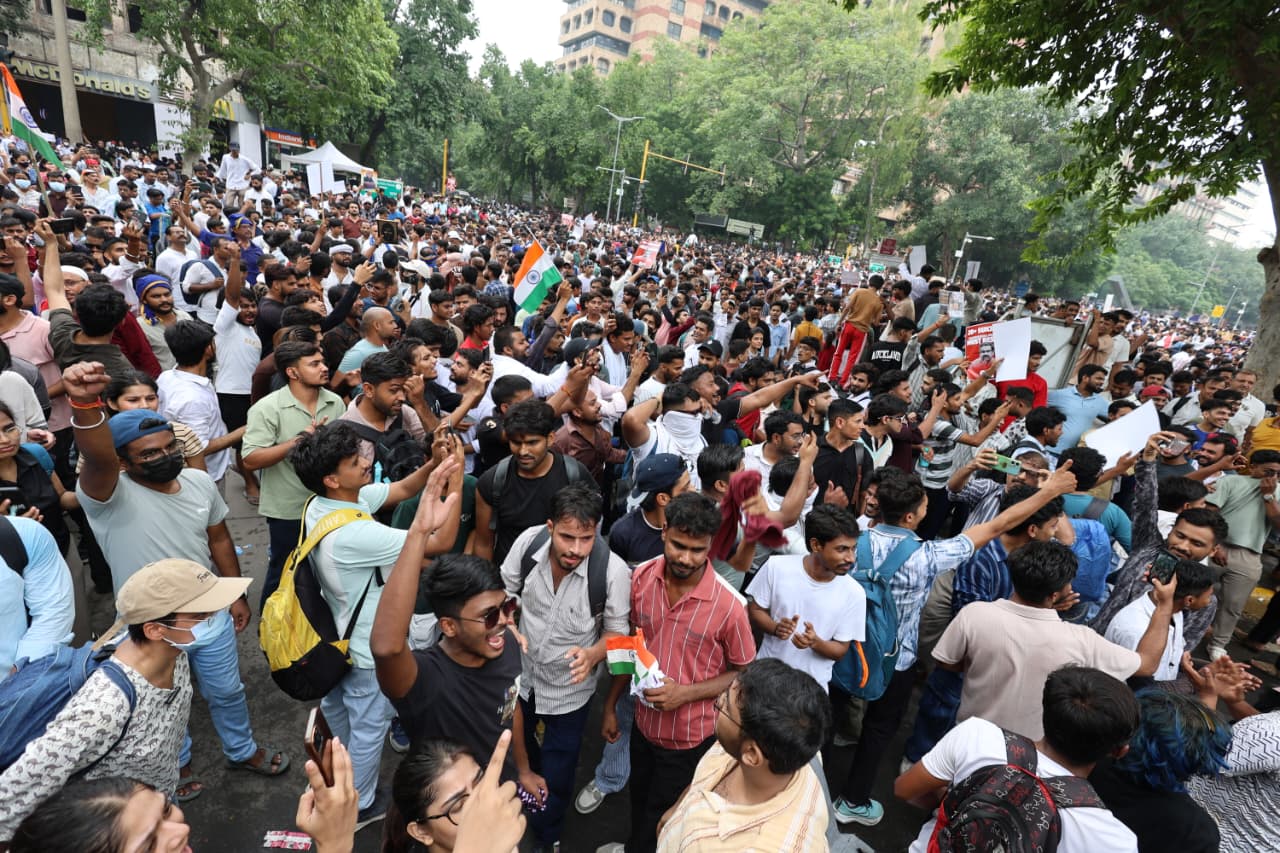
Defying barricades, the student procession reached within 100 meters of the Parliament building today. Notably, Cockroach leader Abhijit Dip had demanded the prime minister's resignation alongside the education minister on Saturday. Witnesses alleged that shortly after today's march began, Delhi Police detained him from the rally, though he was reportedly released later. Unofficial sources, meanwhile, claimed baton charges, tear gas shells, rubber bullets, and water cannons injured over a thousand students and citizens.
"For about a decade, the BJP-RSS has run an authoritarian and fascist government in India, and this movement seeks a resolution to that," Cockroach leader Sourav Das said during the march. The party's top leader Abhijit Dip added, "This has turned into a fight to reform the education system and restore democracy."
Crowds began gathering at Delhi's Jantar Mantar early in the morning. From his hospital bed, educationist and social activist Sonam Wangchuk urged the masses to keep the ‘Parliament March’ peaceful. He had earlier termed the uprising "India's second freedom struggle." His wife, educationist Gitanjali Angmo, also joined the march, while police and paramilitary forces maintained a heavy presence around Jantar Mantar from dawn.
By noon, New Delhi was placed under heavy security. Police erected strong barricades in front of five adjacent metro stations to keep the crowds at bay. Protesters, however, breached the blockades and advanced toward Jantar Mantar.
Police failed to disperse the crowds despite resorting to baton charges and water cannons. Authorities significantly stepped up security at the Parliament and the residences of PM Modi, Home Minister Amit Shah, and Education Minister Dharmendra Pradhan. Before the protesters could reach the Parliament gates, the government sought talks with Cockroach Janata Party leaders. During the meeting with JP Nadda, both sides agreed that the central government would ensure a proper investigation into the NEET leak and punish the culprits. Even so, the cockroach leaders stood firm on their demand for the education minister's resignation.
Union Minister JP Nadda later posted on X (formerly Twitter): "A detailed discussion took place in a highly cordial atmosphere. Initially, thorough verbal dialogues were held with the representatives of the protesters. At around 4 PM, they formally handed over their written charter of demands to me."
Despite the talks, the state crackdown continues, and so do the protests. Internet services remain disrupted amid intense student unrest across Delhi, Rajasthan, and Mumbai. Reports indicated a severe clampdown by the Indian Army, paramilitary forces, and Delhi Police in New Delhi. Meanwhile, students demonstrated outside the Union Education Minister's private residence in Odisha. In Jammu & Kashmir, former Chief Minister Farooq Abdullah led similar demonstrations. In West Bengal, students, ordinary citizens, and members of Congress, CPM, TMC, and Naxalite groups took to the streets across Kolkata, Santiniketan, and Baharampur in a unified protest against the central government.