Murder of a Delta: Japan’s Bangladesh Model of Development or Death Sentence for Millions
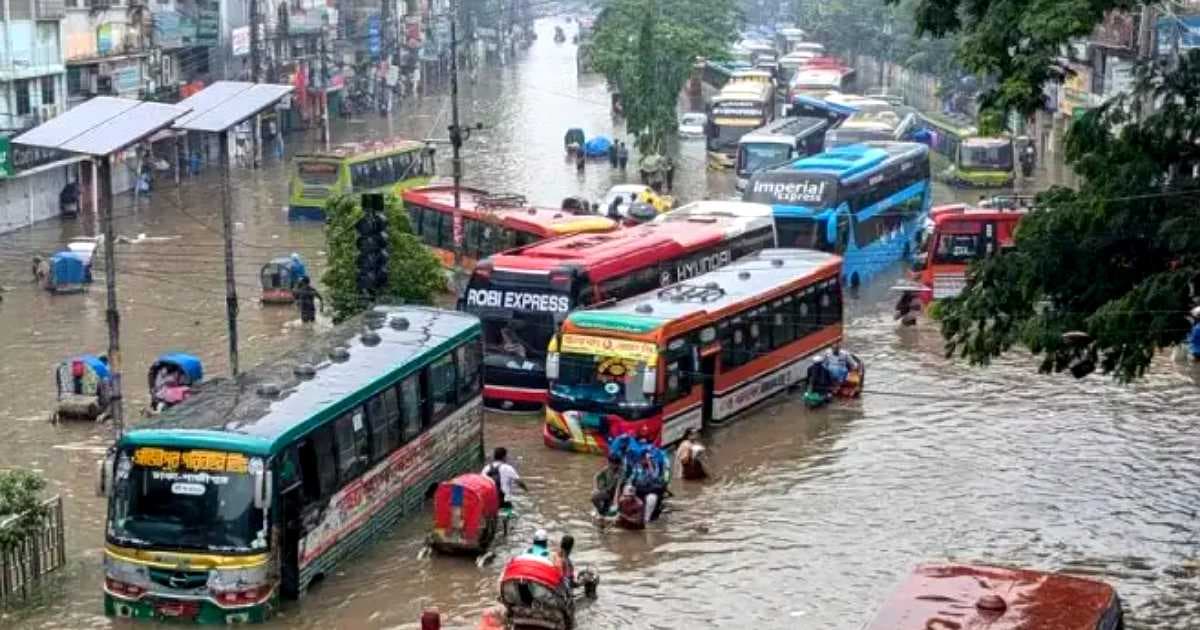
In the land of monsoon celebratory songs for rain are now replaced by agony filled social media posts by the city dwellers and streaming news from countryside of catastrophic crop loss.
Every monsoon, Bangladesh witnesses the same tragedy unfold. Today, a mere 76 millimetres of rainfall drowns Dhaka, roads disappear beneath water. Entire neighbourhoods in the megacity grind to a halt after only a few hours of rain. Chattogram floods, witness landslides, Feni and Comilla struggle with waterlogging. Large parts of northern Bangladesh are inundated, while the south-west from Bhabadah in Jashore to sections of Khulna remains under stagnant water year after year like an inland sea. Millions of Bangladeshis suffers as if this is an unavoidable punishment for their own crime.
Climate change is often presented as the obvious explanation. It is certainly part of the story but does not cover it all. Bangladesh is among the countries most vulnerable to rising sea levels, erratic rainfall and increasingly intense weather events. But climate alone cannot explain why a country built upon one of the world's greatest river systems is becoming progressively less capable of living with water.
The uncomfortable truth is that many of today's floods are not simply natural disasters. They are engineering disasters and engineered to deliver miseries for millions of Bangladeshis in the name of development.
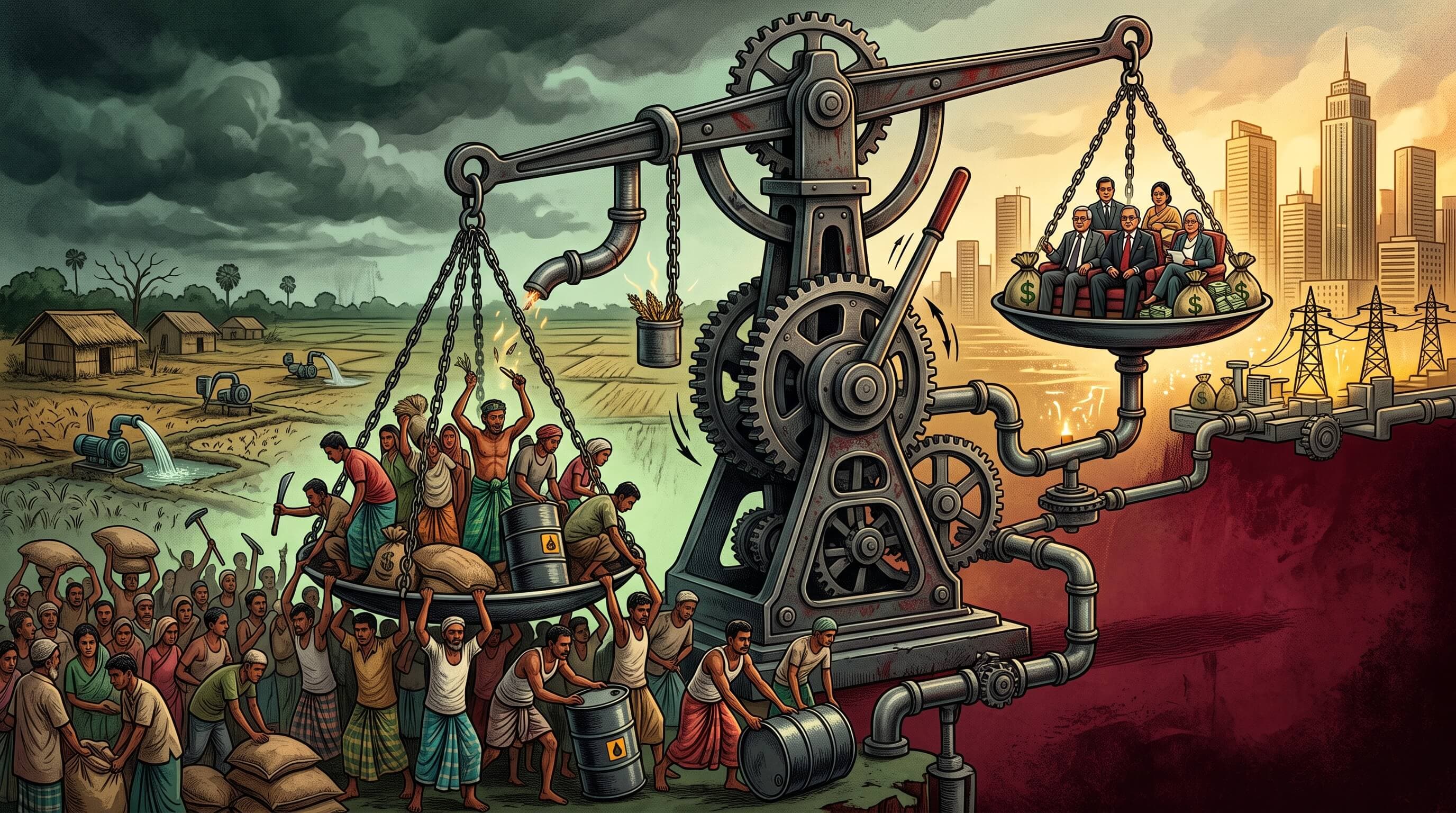
For decades, Bangladesh has responded to water by attempting to control it with advice and investment from sources like Japan, World Bank and Asian Development Bank. Rivers have been narrowed, floodplains cut off, wetlands filled, canals buried and thousands of embankments, sluice gates and polders built across the delta. Each project was justified as progress. Collectively, however, they have transformed the way water moves through the country.
When the Rain Returns as Enemy
In the delta, monsoon rain is not a stranger. For generations, the Bengali months of Asharh and Shraban arrived with their familiar rhythm sky opening, fields drinking, rivers swelling, then receding. It was a covenant between land and water. That ancient covenant is broken.
We are quick to blame India and not without cause. The Farakka and Teesta Barrages, among dams on 34 shared rivers, have strangled our downstream flow. But India did not build the sluice gates that suffocate our internal rivers. India did not fill Dhaka's wetlands. India did not turn our waterways into roads. That work was done here, with our signatures, and with Japanese money from Japan International Cooperation Agency (JICA).
The infrastructure development Trap
Under Japan's official development arm, JICA, Bangladesh has constructed nearly 10,000 dams, sluice gates, and regulators across the country. Major rivers have been narrowed into channels. Our navigable waterways have collapsed from 24,000 kilometers to barely 3,400. In the name of building roads, we have paved over our own lifelines.
JICA calls itself Bangladesh's "development partner." The truth is more complicated. For over five decades, the agency has pursued what development economists call "infrastructure fetishism," an obsession with concrete, steel, and machinery that treats rivers as obstacles to be controlled rather than systems to be understood.
The pattern is always the same. JICA arrives with a master plan. The plan has two parts: "infrastructure development" embankments, pumps, drains and "software" wetland conservation, institutional coordination, environmental safeguards.
The infrastructure development gets built. The social and ecological is buried with the riverbeds.
Dhaka's Eastern Fringe: A Case Study in Managed Collapse
Take the Eastern Fringe Project, JICA's flagship flood protection scheme for Dhaka, running since the 1990s. The master plan was elegant on paper: embankments and pump stations would defend the city, while its eastern wetlands, beels (marshland), and retention ponds would absorb the rain. These natural water bodies were designated as the city's kidneys, strictly protected from encroachment. Land-use zoning would require drainage impact assessments before any construction. An integrated authority, bringing together Dhaka WASA, the City Corporation, RAJUK, and BWDB, would manage the system as one living organism.
None of that happened.
JICA built the embankment. It installed the pumps. It re-excavated the main canals. Then it left. The moment the budget ran out, so did the responsibility.
What followed was predictable.
RAJUK's Purbachal project, backed by real estate interests with deep political connections, filled thousands of acres of retention ponds. The city's natural kidneys were paved over for apartment blocks. JICA issued a written objection paper protest against concrete profit and looked away. The embankments it built now act like a prison wall, trapping rainwater inside a city whose drainage system has been sold off piece by piece.
Today, an hour of rain turns Dhaka's eastern roads into rivers. Dengue breeds in the stagnant water. The "development partner" built the cage; local land-grabbers threw away the key.
The Bridge, the River, and the Forgotten People
The same script played out on the Jamuna. The Bangabandhu Multipurpose Bridge was sold as connectivity, but it was also a massive river management project financed and advised by JICA. The infrastructure development the bridge, guide bunds, hard points rose from the water. The social and ecological or simply the rehabilitation of char dwellers displaced by river management, the fisheries plan to protect fish habitats, the adaptive dredging strategies based on siltation monitoring vanished into file cabinets.
Thousands of families from the Char areas, displaced by the bridge's construction and the river's altered course, were abandoned. No rehabilitation. No alternative livelihoods. Fish passage under the bridge was obstructed; farmers downstream watched their lands choke on new siltation patterns without compensation or support.
In Chattogram, JICA has spent years and millions on Karnaphuli River bank protection and port dredging. The infrastructure development part of the investment intensive embankments, dredging contracts was delivered. The environmental safeguards were not. Shipbreaking yards, those poisoned beaches of rust and asbestos, still line the riverbank, dumping lead and chemical waste directly into the water.
JICA's multi-million-dollar dredging cannot save a river being killed at its source. Modern sewerage for the city remains largely unbuilt. The river drinks the city's untreated waste, and the "development partner" counts the tonnage of excavated silt.
At the Rupsa River in Khulna, the Khan Jahan Ali Bridge project promised integrated salinity management, sluice gates to protect the river mouth, tree plantations, and full rehabilitation for fishers and small traders whose livelihoods depended on the river's freshwater ecosystem. It was written beautifully. It was never practiced. After construction, illegal encroachment accelerated, water flow paths narrowed, and the fishers of Rupsa found themselves poorer than before.
Environmental Impact Assessment: The Whitewash Machine
In the modern development bureaucracy, the Environmental Impact Assessment (EIA) has become a ritual of absolution. The World Bank and JICA insist on them. They are conducted, filed, and forgotten.
On the Jamuna, the Bangabandhu Bridge's massive guide bunds crippled the river's natural sediment distribution. Upstream, floods intensified. Downstream, breeding grounds for hundreds of freshwater fish species were destroyed. The EIA called it "resilience." It called it "compensation." The river called it death.
In Chattogram, the shipbreaking industry releases tons of lead, asbestos, and chemical waste into the Karnaphuli daily. JICA's dredging cannot cure poisoning. The structures lack the will to confront the real polluters real estate syndicates and heavy industry owners who fill the wetlands and contaminate the rivers.
The Kohelia River: A River Buried Alive
If you want to see the moral calculus of this development model, look at the Kohelia River in Cox's Bazar.
Once, the Kohelia was a swift, living artery flowing from the Matamuhuri into the Bay of Bengal. Its brackish waters created one of the region's finest natural nurseries. White Coral, Vetki (Sea Bass)spawned in the estuary's unique fresh-salt mix. Shrimp and crabs thrived in mangrove roots. Fishermen still speak, in the hushed tones of memory, of Coral weighing 15 to 25 kilograms.
Then came the Matarbari Deep Sea Port and the coal-fired power plant. To transport materials, JICA funded and the Roads and Highways Department supervised the construction of a four-lane road by filling the Kohelia's riverbank and main channel. At least 7.4 kilometers of river were buried under sand and soil.
The river's tidal currents were blocked. Its flow path was severed. Dredged soil and untreated waste from power plant construction turned the water turbid and toxic.
Salinity and pH levels shifted; fish eggs could not survive. The White Coral, that estuarine giant, stopped breeding. Over 4,000 fishing families lost their livelihoods. Hundreds of shrimp enclosures and salt farms were destroyed. Mangrove forests died. Adjacent lands waterlogged.
The Kohelia was not just a river. It was a ecosystem and food system, a culture, a way of life. It was strangled so that trucks could drive to a power plant.
Locals protested. Environmentalists protested. JICA, which enforces loan conditions with precision when repayment is due, found itself diplomatically unable to stop a river from being buried alive.
The Double Standard
Here is the cruelty that exposes the lie. In Japan, JICA's home country, environmental sensitivity is absolute. A small reservoir alteration, the protection of a few dozen turtles or rare frogs, can delay a project for years and trigger hundreds of thousands of dollars in restoration spending.
In Matarbari, the same Japanese state apparatus sanctioned the burial of a 7.4-kilometer living river the foundation of a vast estuarine ecosystem under sand and cement. The message is clear: Japanese environmental law protects Japanese nature.
Bangladeshi nature is a construction site.
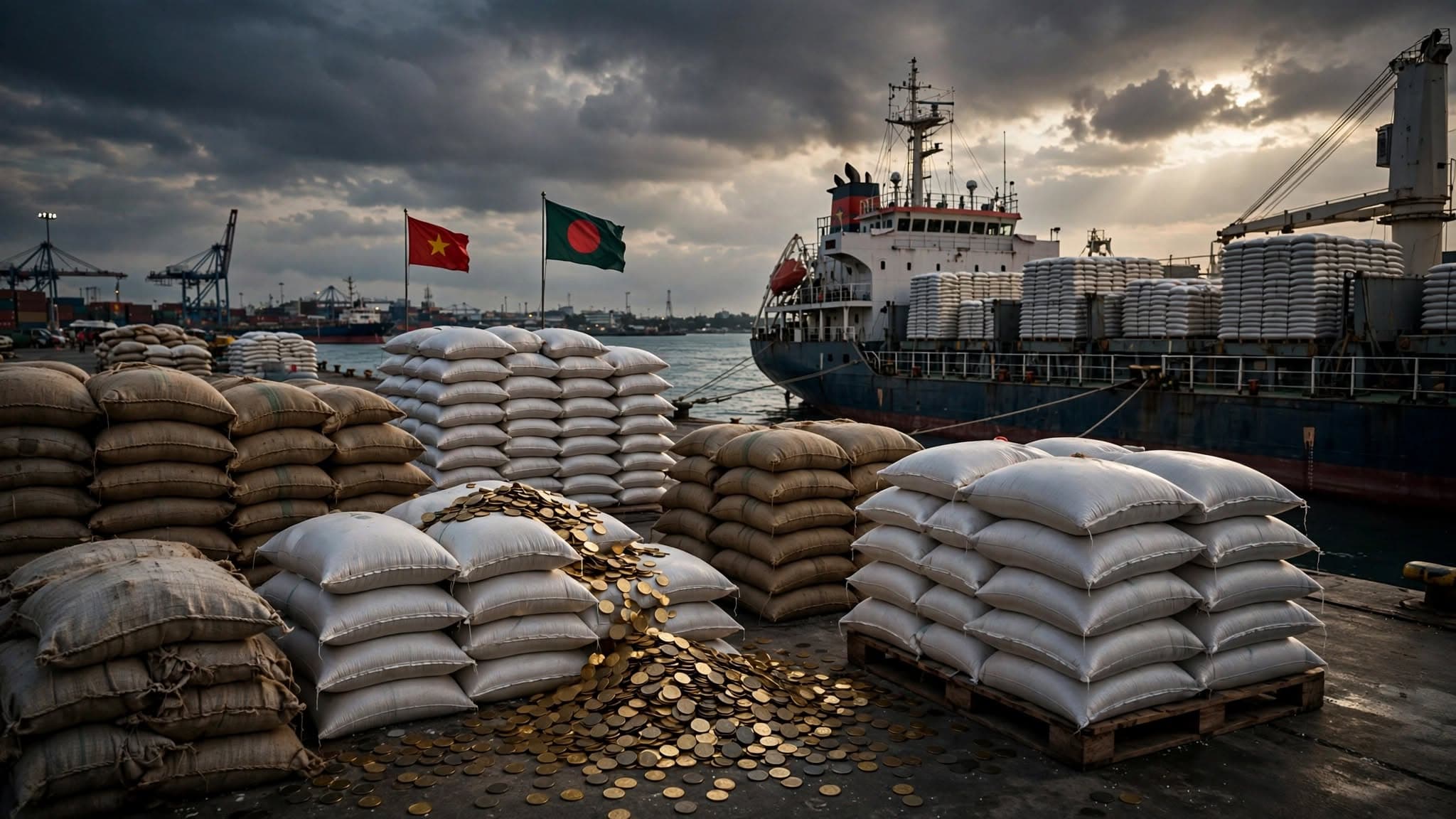
This is not diplomatic helplessness. It is structural opportunism. Protecting wetlands offers no profit. Building dams, importing Japanese turbines and pumps, excavating canals these generate billions. The contractors win. The consultants win. The car manufacturers win. The river loses. The people drown.
The Empire of Roads
There is a market logic behind the hydrological destruction. Japan's primary export to Bangladesh is automobiles. Toyota, Honda, Mitsubishi dominate our streets. To sell cars, you need roads. In a riverine country where water transport costs one taka per unit against eight by road, that means destroying the competition.
And so the rivers were shackled. Under the Bangladesh Water Development Board, roughly 5,500 to 6,000 regulators, sluice gates, and drainage outlets now control large and medium projects and 139 coastal polders. Under the Local Government Engineering Department, another 10,000 small structures regulators, canal gates, rubber dams have been built on agricultural land under JICA-funded "Small-scale Water Resources Development Projects." Between 400 and 1,000 such sub-projects have been implemented at the union and village level.
The result? Permanent waterlogging. Polders prevent river silt from spreading naturally over farmland, so it accumulates on riverbeds instead, raising water levels. During monsoon, the river runs higher than the poldered land behind it. Internal water cannot drain out through the sluice gates. JICA built the trap. Then it left.
Bhabadah: When Local Knowledge Dies
In the south, farmers once practiced Tidal River Management (TRM) keeping beel mouths open to tides so sediment would naturally raise the land and deepen the rivers. It was knowledge forged over centuries. JICA-funded polders killed it. Concrete sluice gates trapped sediment, raising riverbeds above beel land. The result is Bhabadah decades of permanent waterlogging in Jashore, a man-made lake where farmland once grew rice.
This is what scholars call epistemic violence: the destruction of local knowledge by imported expertise. The 15,000 to 16,000 artificial structures now dotting Bangladesh's waterways are not flood controls. They are coffin nails, driven into our soil with Japanese grants.
The Cost We Do Not Count
The shift from water to roads has a body count. According to the World Health Organization, road accidents kill an average of 25,000 people annually in Bangladesh. Diesel imports for road vehicles cost approximately $5.5 billion - 65,000 crore taka every year. With a functioning river transport system, accident rates would plummet and diesel costs would drop to roughly one-eighth, around 8,000 crore taka.
A goods truck in Bangladesh averages 5 to 7 kilometers per liter of diesel. Bulk cargo on a barge uses near-zero fuel per ton. The environmental cost carbon emissions, pollution, the erasure of waterways is incalculable.
Eighty-five to ninety percent of private cars on our roads are Japanese. By shrinking 24,000 kilometers of waterways into 3,400, Japan has built a captive market. The cost is 65,000 crore taka in fuel, 25,000 corpses on the asphalt, and a nation that drowns in its own rain.
The Unasked Question
When floods come, JICA blames government maintenance failures. The government blames unplanned urbanization. In this cycle of mutual absolution, the question of neglected environmental safeguards disappears.
But the question remains: If JICA can enforce loan conditions on a sovereign government, why can it not enforce conditions to protect people and rivers? Why does the "development partner" have power over our treasury but none over our wetlands?
The answer is uncomfortable. In the political economy of development, there is an unspoken pact between foreign donors and local elites: "Allow us to install infrastructure development in your natural resources, and we will turn a blind eye to local lawlessness." When corruption is exposed, they stage a drama of "diplomatic limitations" and blame Third World inefficiency. When interest payments are due, there are no diplomatic limitations.
Reckoning
This is not an engineering dispute. It is a political question about who defines development and who pays its price.
Japan is branded our "sincere friend" and "primary development partner." But a friend does not bury your rivers. A partner does not build 16,000 structures that turn your monsoon rains into a weapon against your own people. A sincere ally does not profit from your road deaths while its own environment is protected by laws it considers unnecessary for yours.
We must think anew about old perceptions. The next time Dhaka floods in an hour of rain, remember the Kohelia. Remember the filled wetlands of Purbachal.
Remember Bhabadah.
Remember that the water rising in your street is not nature's betrayal. It is the bill coming due for a development model that treats rivers as real estate and people as collateral.
The Japanese model gave us roads. It took our rivers. The question is whether we will let it take the rest.