Ritwik Ghatak’s 101st Birth Anniversary Marked on the Ruins of His Ancestral Home
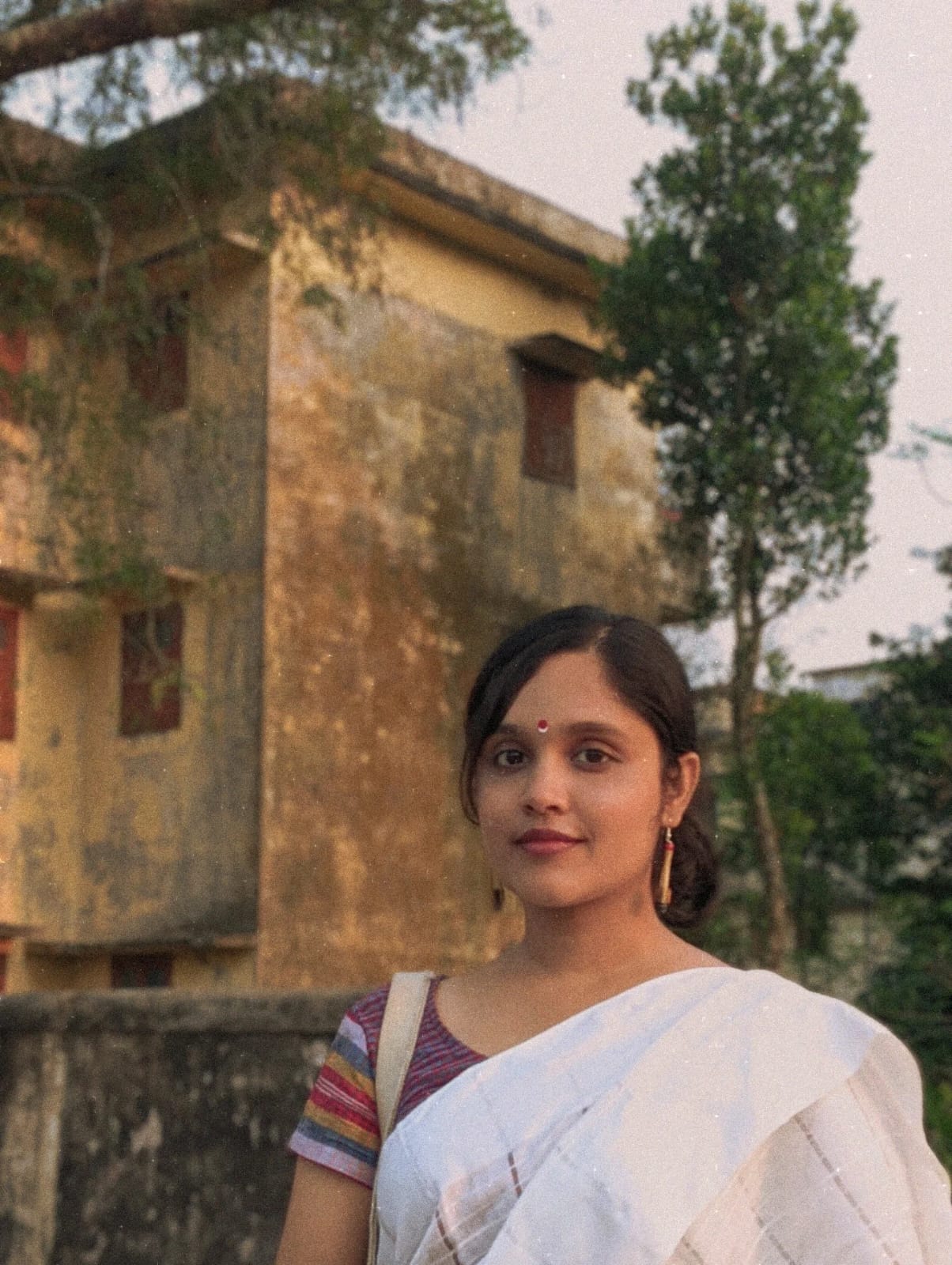
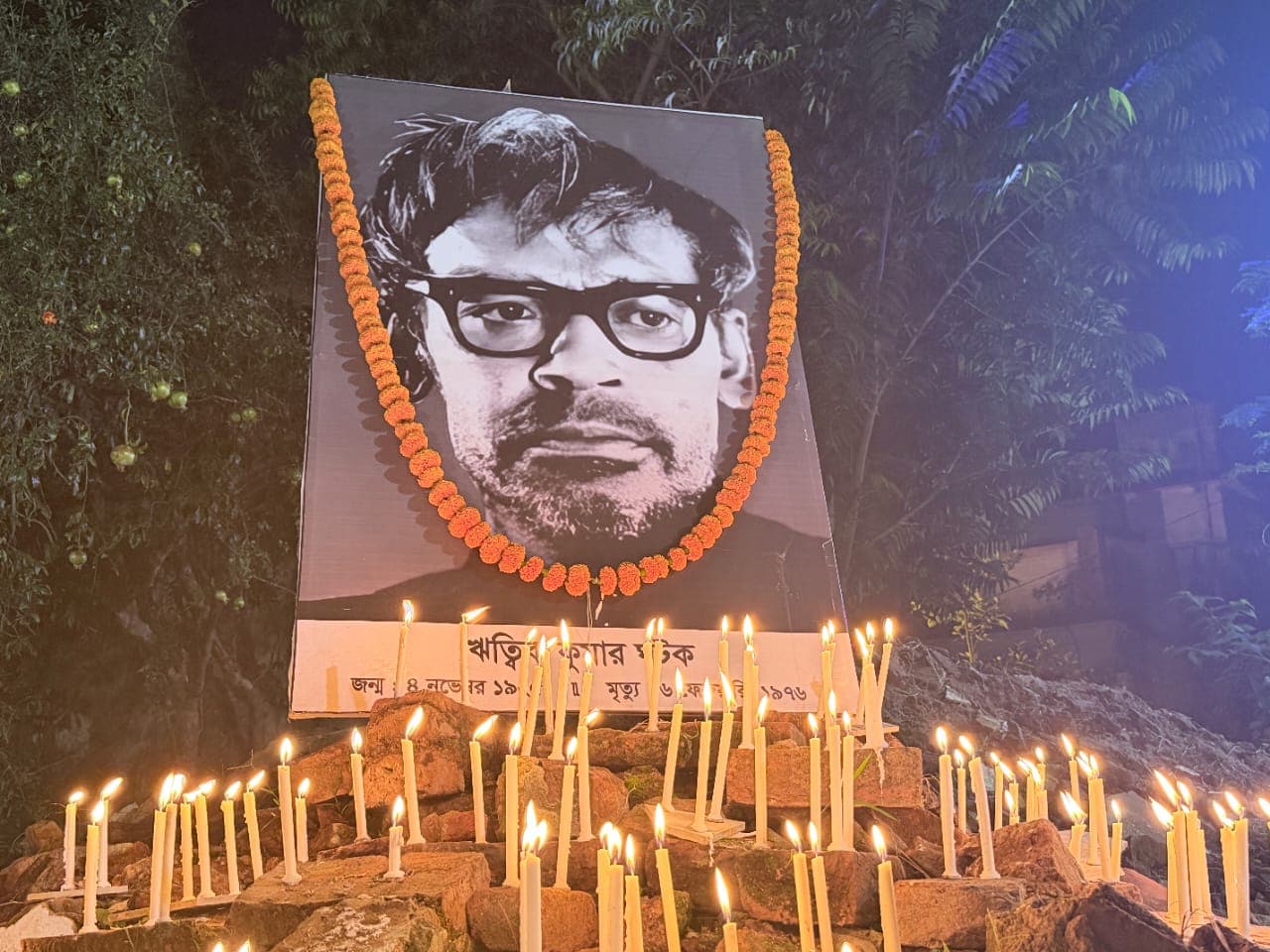
Photo: Dhaka Papers
The Ritwik Ghatak Film Society, Rajshahi, organized the event at 4 p.m. yesterday, Wednesday (November 4), in Rajshahi’s Mianpara neighborhood. The house was torn down on August 6, the day after the 2024 mass uprising led by students and ordinary citizens.
The 101st birth anniversary of Ritwik Kumar Ghatak, one of the subcontinent’s most celebrated filmmakers, was once again observed on the ruins of his ancestral home. The Ritwik Ghatak Film Society, Rajshahi, organized the event at 4 p.m. yesterday, Wednesday (November 4), in Rajshahi’s Mianpara neighborhood. The house was torn down on August 6, the day after the 2024 mass uprising led by students and ordinary citizens.
The program featured the national anthem and mass songs, followed by a lamp-lighting ceremony and a discussion about Ritwik Ghatak. It closed with a screening of his film Titash Ekti Nadir Naam (A River Called Titas). The speakers included Professor Dr. Shikha Sarkar, principal of New Government Degree College, and Jewel Kibria, associate professor of Bangla at Rajshahi College. Rajshahi District Cultural Officer Dr. Md. Farukur Rahman Faysal and filmmaker Muntasir Abir also took part. Members of various cultural organizations, filmmakers, and film lovers were in attendance.
Ghatak’s mother, Indubala Devi, owned 34 decimals of land on plot No. 178 of Rampur mouza in Rajshahi district. Ghatak lived in this house until Partition. He studied at Rajshahi Collegiate School and Rajshahi College. His niece, the novelist Mahasweta Devi, also spent her childhood here.
After Partition, the family moved to Kolkata. The property was then listed first as enemy property and later as vested property. In 1989, under the Ershad government, the entire 34 decimals of the homestead were leased to Rajshahi Homeopathic Medical College. A college and a hospital were later built there. A multi-story building went up on the northern part of the land, but several rooms of the old family home survived on the southern part.
In 2019, the college authorities demolished part of the house to build a bicycle garage. Cultural organizations and film activists in Rajshahi and across the country protested.
Twelve filmmakers, including Nasir Uddin Yousuff, Tanvir Mokammel, and Morshedul Islam, issued a joint statement. Thirteen cultural organizations submitted a memorandum to the district administrator, demanding that the house be preserved and a memorial museum be established there. The college’s principal at the time, Dr. Anisur Rahman, said the demolished portion was dilapidated and could have collapsed at any moment. In 2020, the district administration wrote to the Ministry of Land, asking that the land be released from the lease and allotted in Ritwik Ghatak’s name. No decision was ever made.
On the night of August 6, 2024, the house was completely demolished. When film activists heard the news and rushed to the site, they found the debris already being cleared. Principal Anisur Rahman claimed that vandals had torn down part of the house because it contained a Bangabandhu Corner. According to him, the mud house then collapsed entirely while workers were clearing the site. However, the contractor, Shamim Mia, admitted to the media that the college authorities themselves had ordered him to demolish the house. When cultural activists asked to see the CCTV footage, the authorities refused. It later came out that the hard drive held no footage from after noon on August 6. Under pressure from film activists, the administration then launched an investigation and barred anyone from removing the debris. But the findings have still not been made public.
What’s more, in defiance of that ban, another attempt was made to remove the debris on Victory Day, December 16, 2025. According to the truck driver, the bricks were being loaded onto trucks and used to fill a pit in the Khorkhori area. Tuktuk Talukdar, then president of the college’s governing committee and additional district administrator (education and ICT), offered the media an explanation. In her account, if the site were left in that state, senior officials coming on inspection visits might form a bad impression, so it was decided to clean it up. Cultural activists protested and stopped the work.
On December 18, they formed a human chain and put forward three demands: punishment for those involved, the return of the bricks that had been taken away, and preservation of the house.
Several organizations have been steadily involved in the campaign to save the house. They include the Ritwik Ghatak Film Society, Rajshahi Film Society, Rajshahi University Film Society, Celluloid Film Society, Barendra Film Society, Footprint Film Production, and Kobikunjo.
Still, no meaningful steps have been taken to preserve the house. Cultural activists have demanded that the land be released from the lease and the remaining ruins of the ancestral home be preserved. They also want a memorial museum built there and a setting suited to filmmaking and film study. They have further demanded action against those responsible for demolishing the house and removing the bricks. None of these demands has been met.
Against this backdrop, Rajshahi’s film lovers and Ritwik devotees celebrated his 101st birthday on the rubble of the demolished house.
Your contribution keeps investigative journalism fearless, transparent, and accessible to everyone. To support us securely donate from anywhere.