Bangladesh's Strategic Leap into Atomic Era: Fuel loading begins at Rooppur Nuclear Power Plant
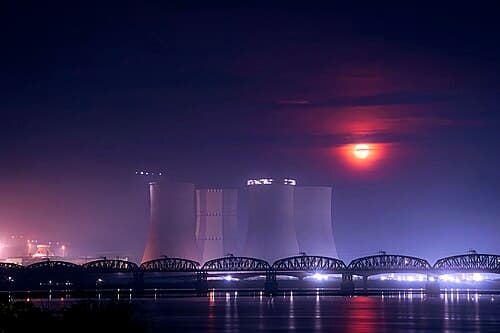
Photo: Wiki
However, it has been assured on several occasions that the Rooppur nuclear power facilities would supply electricity to the national grid at a lower price than any thermal power plants run on imported coal in Bangladesh.
The Rooppur Nuclear Power Project is a dream first envisioned by the USA, sustained by France, Germany, Switzerland, and China, and finally materialised by the Russian Federation.
Yes! Finally, Bangladesh is going to experience the immense power of nuclear energy as it transitions into a new era of electricity generation with zero carbon emissions. With the first nuclear fuel assemblies now being loaded into the heart of the country's debut commercial reactor, a new horizon is opening for the nation's industrial and economic future.
Yesterday, the 14th of Boishakh of 1433 Bangla calendar, the state-owned commercial venture Nuclear Power Plant Company Bangladesh Limited (NPPCBL) began loading 163 fuel assemblies into the Rooppur Nuclear Power Plant's first reactor. This process, conducted with technical support from the Russian Federation, marks the final phase before the reactor transitions from construction to commercial operation. At the same time, a 65-year journey is about to end.
The physical startup of the reactor will begin after all 163 fuel assemblies are loaded into the core. Using a precision control system, engineers are slowly bringing the reactor to its first criticality — the point of a self-sustaining nuclear chain reaction. In this phase, uranium-235 atoms split via fission, releasing immense heat. Once criticality is confirmed, the heat will be allowed to turn water into high-pressure steam. The steam spins turbines, which rotate armatures inside a magnetic field to generate alternating current (AC) electricity.
It will take three to four months before the system starts supplying electricity to the national grid at a smaller load — up to 300 MW — and a year before it supplies at full load, said officials concerned. Fuel loading at the second reactor is expected to begin in 2027.
The Russian Federation's Atomstroyexport, a concern of ROSATOM, supplies and constructs everything needed for building the two nuclear power units with VVER-1200 technology for Bangladesh at a cost of total of $13.21 billion, including $0.555 million spendings for preparatory works. Each of the power units has a 1,200 MW gross and a 1,080 MW net generation capacity.
Bangladesh started construction of its first nuclear reactor with a ceremonial First Concrete Pouring (FCP) on November 30, 2017, followed by the second reactor in 2018.
The construction of the first unit of the Rooppur Nuclear Power Plant was planned to be completed by 2021 and the second reactor by 2022. The global pandemic COVID-19, the Russia-Ukraine war, and delays in national power grid upgradation are cited for the delay.
With the FCP, Bangladesh joined the global nuclear club as the 33rd nation to use nuclear technology for electricity generation. She is also the third member among SAARC nations and the sixth in Asia.
According to the World Nuclear Association, each of the other five Asian countries possesses two to all capacities, which include uranium mining and conversion into oxide for uranium enrichment, fuel fabrication, reprocessing (recovering Plutonium and unused Uranium) of spent nuclear fuel, and nuclear waste management. These nations have developed their own workforce for the operation and maintenance of approximately 142 nuclear reactors actively involved in electricity generation. They have made significant progress in developing linkage industries to manufacture and supply spare parts and some reactor components. These domestic capacities have lowered their cost of construction, operation, and maintenance of nuclear facilities.
In contrast, Bangladesh joins the prestigious club without these extensive preparations or even an ambition to develop most of such capabilities. It adopted an open-book program in a plug-and-play fashion with a very single objective: to generate electricity from it.
Perhaps this approach helped gain global trust that Bangladesh will not go for nuclear arsenal development, since these capabilities and facilities are mostly the same for both peaceful use and arsenal development.
It appears as a trade-off between two factors. One option suggests building comprehensive capabilities in nuclear fuel enrichment, reprocessing of spent nuclear fuel, and nuclear waste management, which may create global concern with a suspicion that Bangladesh might have hidden intentions of developing nuclear weapons, leading to unexpected embargoes and even sanctions. The second option suggests going for the plug-and-play method without developing those capabilities, raising the project cost alone. The government chose the second option, and apparently it has worked so far in terms of offsetting global and regional concerns about the Rooppur Nuclear Power Project.
As an obvious consequence, the cost of the Rooppur Nuclear Power Plant construction has been found to be much higher than those being installed with similar technologies in other Asian countries.
The authorities concerned have yet to clarify the impact on the cost of electricity generation and the possible bulk tariff at which the Bangladesh Power Development Board would purchase electricity from NPPCBL. This opacity has drawn criticism since Bangladeshi authorities signed the construction contract in late 2015 with their Russian counterparts.
However, it has been assured on several occasions that the Rooppur nuclear power facilities would supply electricity to the national grid at a lower price than any thermal power plants run on imported coal in Bangladesh.
It is expected that the authorities concerned will come up with a reasonable tariff scheme so that the Rooppur Nuclear Power Plant becomes the most reliable source of baseload electricity, offsetting the country's growing cost of electricity generation.
Despite some criticisms at home and abroad, the progress of the dream project is quite dramatic. Backed by the United States of America, the project was first conceived in 1961 at Rooppur of Pabna, on the bank of the mighty river Padma, in the then East Pakistan. Soon the project, like many others, experienced regional disparity. The then military dictator administration relocated the project to Karachi in West Pakistan in 1965.
Meanwhile, a number of feasibility studies were carried out, and 260 acres of land were acquired to install a nuclear power plant with 200 MW capacity at Rooppur. East Pakistan’s popular political party Awami Leage picked the matter as an instance of regional disparity and continued pressing demand for the implementation of the Rooppur Project. By 1970, the Pakistan government had scrapped the Rooppur project.
A brief timeline in the Bangladesh era:
On December 16, 1971, Bangladesh won a bloody war imposed by the West Pakistani rulers and their local collaborators. The first government of the People's Republic of Bangladesh established the Anobik Shakti Kamishon in 1973 and revived the nuclear power project.
In 1977-78, a feasibility study, carried out by French consulting firm Sofratom, affirmed the project’s acceptability from financial, economic and technical perspectives. The firm suggested to build a 125 MW nuclear power plant at Rooppur.
In 1980, the Executive Committee of the National Economic Council (ECNEC) approved a project proposal in based on Sofratom’s findings. Efforts were made to secure funding from Saudi Arabia and France. But the project was shelved again due to the global shift against use of nuclear technology following the Three Mile Island accident in the USA (1979).
On September 14, 1986, the authorities commissioned a 3 MW TRIGA Mark-II research reactor at Savar.
Between 1987 and 1988, German firm Lahmeyer International and Swiss firm Motor Columbus carried out a fresh round of major feasibility review recommending a 300–500 MW plant at the Rooppur site. A high-powered committee, with the Head of the Government in chair, titled Implementation of the Rooppur Nuclear Power Plant Project was formed to identify and address implementation challenges and provide guidance. In 1988, the Anobik Shakti Kamishon was renamed the Bangladesh Atomic Energy Commission (BAEC). Unstable domestic politics and a major shift in the government structure kept the move shelved.
On April 13, 1994, the high-powered committee held its first meeting and formed a high-powered sub-committee to evaluate implementation challenges, determine solutions and submit specific proposals to the main committee.
On 7 May 1995, the second meeting of the Rooppur Nuclear Power Plant Project Implementation Committee, with the then prime minister in chair, adopted a policy decision to advance the project.
Between 1997 and 2000, the BAEC drafted a plan for the installation of a 600 MW plant at the same site. The 'Bangladesh Nuclear Power Action Plan-2000' was approved.
In 2005, the then government signed a nuclear cooperation agreement with China. The BAEC proposed the construction of two 500-megawatt nuclear power plant units at Rooppur by 2015, with estimated costs ranging from $0.9 billion to $1.2 billion for one unit and $1.5 billion to $2.0 billion for the other.
Until 2006, the dream project was sustained within technical feasibility studies and planning upgradations as the nuclear power industry evolved. However, all the moves saw no ultimate success, mainly due to the competitive bidding modality of the project implementation, and the bidders’ findings about Bangladesh which had made limited progress in socioeconomic and sociopolitical indicators.
Between 2007 and 2009, a drastic change was brought into its efforts by the BAEC to build the nuclear power plant, with the view that building such infrastructure could only be possible through a government-to-government deal with a supplier country having the technological and funding capacities as well as political commitments to the host country.
At least two other events took place simultaneously at home and abroad that helped Bangladesh advance the program to this level. In 2007, Russia enacted a new law and created ROSATOM to organize its nuclear establishments and to facilitate building nuclear infrastructures in other countries on a commercial basis. Soon Russia came up with a 'One Stop Solution' for building nuclear infrastructures. Russia advanced mainly with a government-to-government approach with its previous (Soviet-era) ties. In 2008, the Awami League, in its election manifesto, pledged to advance the nuclear power program to complement its greater power infrastructure development plan. In 2009, the party took office through a general election and initiated collaboration with Russia, recalling its contribution to Bangladesh's War of Independence and post-war reconstruction projects. At the same time, the government enhanced its collaboration with the International Atomic Energy Agency (IAEA) to obtain its technical and knowledge-based support in constructing and regulating nuclear infrastructures in the country.
In 2007–2008, the military-backed caretaker government approved a proposal for a two-unit plant (500 MW each). The IAEA approved technical assistance for 2009–2011.
In 2009, the Awami League-led government approved the Russian proposal for a two-unit plant with a combined capacity of 2,000 MW (later upgraded).
In 2010, Bangladesh and Russia signed a framework agreement for VVER-1000 reactors.
On November 2, 2011, the Inter-Governmental Agreement (IGA) was signed between Bangladesh and the Russian Federation.
On June 19, 2012, the National Parliament passed the bill for enactment of the Bangladesh Atomic Energy Regulatory Act- 2012.
On January 15, 2013, authorities of Bangladesh signed the first Inter-Governmental Credit Agreement with Russia to receive $500 million loan for preparatory works worth $0.555 before launching main construction works.
On October 2, 2013, the foundation stone for the Rooppur Nuclear Power Plant was laid.
On December 25, 2015, the General Contract worth $12.65 billion was signed with Russia's Atomstroyexport.
On November 30, 2017, the First Concrete Pouring (FCP) of Unit-1 took place, earning official recognition for Bangladesh as a member of the nuclear club.
In 2018, FCP for Unit-2 took place. The Rooppur project region around Ishwardi received hundreds of Russian and Bangladeshi workers and began witnessing huge development activity.
Between 2020 and 2021, the pandemic COVID-19 halted global travel, but a 'bio-bubble' at the Rooppur site kept construction alive. The target dates for Unit-1 shifted from 2023 to 2024.
In 2022, Russia invaded Ukraine, which drew Western sanctions on Russian banks (SWIFT). This created a payment stalemate. Bangladesh was forced to deny entry to Russian vessels carrying nuclear components to its ports. This was solved by logistical workarounds through third-party countries.
On October 5, 2023, a historic graduation ceremony was held as the first batch of nuclear fuel arrived at the site.
In August 2024, the country witnessed a regime change through a mass uprising. The interim administration, led by Muhammad Yunus, reviewed the project but upheld it as a strategic necessity.
On April 16, 2026, the Bangladesh Atomic Energy Regulatory Authority (BAERA) issued the commissioning license for Unit-1.
_____
Writer: Joint Editor at Dhaka Papers. Email: [email protected]