Civilization's Eastward Journey: The New Epicenter of Economy, Science, and Military Power

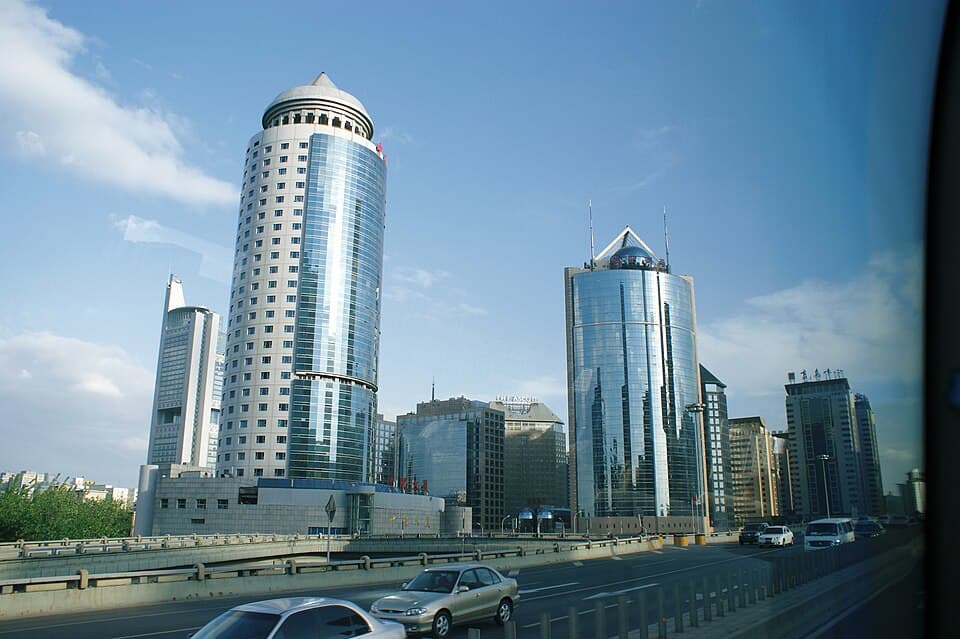
Beijing, Wiki
Asian powers are initiating bilateral trade using their own local currencies. This growing use of local currencies in trade among Russia, China, Saudi Arabia, and Brazil is not only challenging the US dollar; it challenges the monopolistic power structure of Western civilization.
The global economic center of gravity is shifting rapidly, and new players are emerging as major forces in global geopolitics. The decline of centuries-old Western hegemony and the unprecedented rise of Asia is no longer confined to economics textbooks—it is now changing the very trajectory of human civilization.
The day is not far off when people will no longer need to look westward for knowledge, higher education, or cutting-edge research. For a hundred years, Europe and America have been revered as the world's leading centers of learning, but soon the world's brightest minds will flock toward the East. In tomorrow's world, the pursuit of advanced learning and groundbreaking research will ultimately lead people to China, India, or the Far East.
Alongside nations with advanced infrastructure like Malaysia, highly skilled global professionals and researchers will begin relocating permanently to countries like Vietnam or Indonesia within the coming years. Even as the Western world—particularly Europe—drastically liberalizes its visa and immigration policies to combat stagnant economies and aging populations, they may still fail to attract the talent they seek. America is not far from facing a similar fate. Turkey, once captivated by the dream of being a "European country," may soon take greater pride in branding itself as part of Asia. Meanwhile, shedding its image of extreme poverty, resource-rich African nations like Nigeria are rising at remarkable speed.
A fundamental rule of history dictates: wherever the economy moves, knowledge, science, and military power inevitably follow. To deeply understand this transformation, we must examine each nation's contribution to global real GDP.
The Link between Economic Power and Scientific-Military Strength
A country's share of global real GDP growth is more than just an economic indicator—it is the ultimate benchmark determining who will control tomorrow's research laboratories and whose naval fleets will dominate the seas. Here, real growth refers to the value of goods and services produced, adjusted for inflation. Remarkably, nearly half of the world's total real economic growth currently comes from just two nations—China and India.
China's Contribution (26.6%)
China alone accounts for 26.6% of global real economic growth. Having pursued export-oriented industrialization for four decades, China is no longer merely a hub for cheap manufacturing. It is now competing closely with—and in some fields surpassing—the United States in areas like quantum computing, artificial intelligence, green energy, and space science. Leveraging this immense economic foundation, China has built the world's largest navy and developed superpower-level military technologies such as hypersonic missiles. Today, top global minds are gravitating toward institutions like Peking University or Tsinghua University—attracted by cutting-edge labs and generous research grants over Oxford or Harvard.
India's Contribution (17%)
Ranking second, India accounts for 17% of global growth. The primary engine of India's rise is its massive young population and enormous domestic market. India's IT and services sectors have become key pillars of the global technology ecosystem. Propelled by economic prosperity, India is executing successful space missions like Chandrayaan. Simultaneously, prioritizing defense manufacturing, it has built a massive military-industrial complex. India's science-driven leap signifies that South Asian talent is no longer experiencing mass "brain drain" to the West; rather, India is building a foundation for research and development at home.
Indonesia and Vietnam: Emerging Powers
This shift is not limited to China and India; Indonesia and Vietnam are emerging as significant new powers in this orbit.
Indonesia (3.8% contribution) is leveraging its young population and critical minerals like nickel to seize control of the global electric vehicle battery supply chain. By banning raw material exports and requiring investment in domestic high-tech manufacturing, they have achieved a remarkable technological leap.
Meanwhile, Vietnam (1.6% contribution) is no longer just a low-cost production center—it has become a global hub for semiconductor chips and advanced electronics. As global tech titans pour billions into Vietnam, its ordinary universities are transforming into small technology hubs. Recognizing their strategic geographic locations, both nations are forming advanced military alliances and regional security blocs to safeguard their maritime territories.
Beyond these, Turkey (2.2%) is contributing to global economic growth through an active manufacturing sector and exporting modern military tech like combat drones. Dismantling its image as an oil-dependent economy, Saudi Arabia (1.7%) is reinventing itself as a technology and tourism hub driven by visionary planning. Leveraging vast agriculture and natural resources, Nigeria (1.5%) and Brazil (1.5%) are making their mark as emerging powers.
In contrast, the United States—contributing just 9.9% of real growth—manages to sustain itself through innovation but has become critically over-reliant on Asia for both the technologies it invented and the raw materials for production. Germany (0.9%), one of Europe's primary economic engines, now faces crippling energy and technological crises.
The Demolition and Redesign of Institutional Power Architecture
These statistics reveal a stark reality: the Western world today functions largely as a consumer, while the actual producers, innovators, and centers of innovation belong to Asia and the Global South. History shows that the region driving the global economy ultimately shapes both knowledge and military power.
Institutions like the UN Security Council, World Bank, and IMF—built on the foundations of post-World War II Western economic and military dominance—are increasingly being questioned. The rise of the China-led Asian Infrastructure Investment Bank (AIIB) and the historic expansion of BRICS confirm that the Global South is no longer sitting idle waiting for Western frameworks. Bolstered by military and technological strength, Asia is beginning to say: "Global policy agendas will no longer be formulated without us."
Non-Alignment 2.0 and De-dollarization
Backed by self-reliant economies, Global South countries now exercise "strategic autonomy." Vietnam's Bamboo Diplomacy and India's independent oil trade bypassing Western sanctions undeniably prove that the West can no longer blackmail nations. Falling behind in advanced technology and supply chains, the U.S. is enacting semiconductor policies under the guise of "national economic security."
Meanwhile, Asian powers are initiating bilateral trade using their own local currencies. This growing use of local currencies in trade among Russia, China, Saudi Arabia, and Brazil is not only challenging the US dollar; it challenges the monopolistic power structure of Western civilization.
The Future Destination and Lessons for Bangladesh
This historic convergence of Asia and the Global South is not a fleeting trend; it is a fundamental and enduring recalibration in the long journey of human history. Following a century-long interruption, the world's epicenter of economics, industrialization, space science, and military prowess is finally resuming its familiar eastward journey. Global politics today has become multipolar; the era of solitary dominance is unequivocally over.
In this new world of knowledge, Asian academic institutions are increasingly becoming the preferred destination for higher education and research. Technologies developed in the East and the Global South are increasingly capturing markets once dominated by the West.
With this massive shift in global GDP in mind, Bangladesh must chart its future accordingly. Relying solely on cheap labor will no longer suffice; the nation must look to Vietnam to learn how to transform itself into a high-tech economy. Bangladesh can also learn from countries such as Nigeria and Indonesia in making better use of its natural resources and service sector.
Civilization is no longer moving westward. A bright and powerful new world is rising in the eastern sky.