Oil Price Hike: A Fresh Blow to Public Suffering

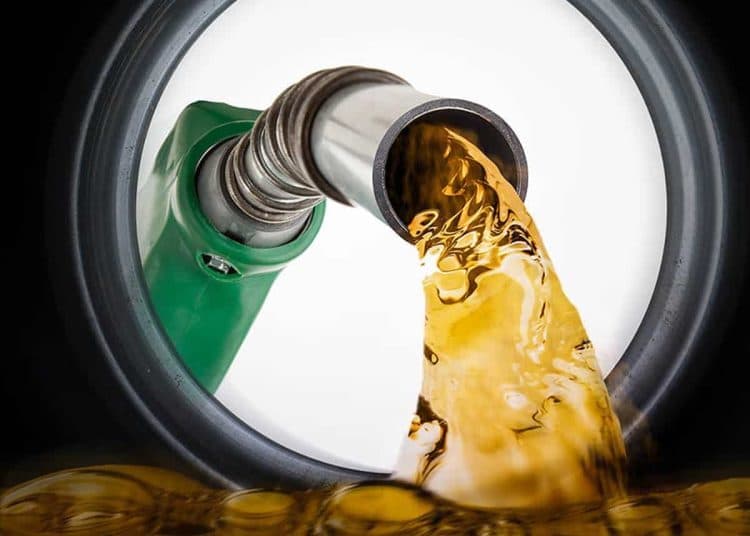
The government claims this 'adjustment' was made due to the rise in oil prices on the international market. But the government has no satisfactory answer as to why that 'adjustment' was necessary at a time when the country’s economy was bleeding.
People of Bangladesh have been reeling under severe supply shortage of fuel oils at filling stations. Many are disappointed after waiting in 3-5 km long queues for six to eight hours or even more, only to find the pumps empty. Rationing, in effect since February 6, at filling stations has forced the consumers to receive a tiny part of their needs for diesel either to run an irrigation pump or a truck or a bus. Cars and motorbike owners have the same experience at the filling stations. Crop fields are cracking and breaking apart due to lack of irrigation. Many farmers are carrying irrigation pump tanks on their shoulders to the filling stations. This frustrates farmers with a threat to damage ongoing Boro cropw which supplies around 55 per cent of the total rice yields a year. Diesel supply shortage had lowered the number of trips by goods-carrying trucks to a half.
The supply system of essential goods is on the verge of collapse due to this month-and-a-half-long chaos in the fuel supply. In some cases, the cost of goods transportation has been doubled. This had already pushed the prices of essential goods up making it difficult for common people to meet their family's needs at higher prices.
Amidst all this, it was expected that the government would do something serious to restore the supply chain of fuel oils. Instead, it, at one go, had raised the price of fuel oils by 15 to 16 per cent on April 19. The government has seemingly fueled the rising trend of commodity prices.
There has been a significant impact on the prices of essential goods in three days after fuel price hikes took place. Soon, its effects are being felt everywhere, from bus fares to house rents. The cost of living will increase, decreasing the living standards.
Bangladesh has going through a time when economic (GDP) growth is around 3.5 percent, the unemployment rate is rising, investment is stagnant, and inflation is around 9 percent. People with limited incomes are in distress. Economists suggest, in such a situation, taking any action that fuels the rise in commodity prices is unwise. Because its consequences are severe. The poverty rate increases rapidly; even a significant number of people might fall below the poverty line. This situation could lead to even more severe conditions in the long run.
Due to the ongoing political and economic instability since 2024, private investment as a share of GDP fell to 22.48 per cent in 2025, the lowest in five years. More than 245 factories had been shut down between August 2024 and July 2025. According to a labor force survey, total employment fell by about 1.7 million during this time. The majority of those who lost their jobs are women.
The state of poverty indicators is also trending towards deterioration. According to World Bank data (2022), the rate of people living below the international poverty line (less than $3.2 per day) was only 5 per cent in Bangladesh. However, a study by the Power and Participation Research Centre (PPRC) in August 2025 found that the rate of people living below the upper poverty line stood at 37.28 per cent, of whom 9.35 per cent are below the lower poverty line. The study also showed that expenditure inequality has increased significantly. Economists blame the rising prices of essential goods for this. In such a situation, the rise in commodity prices will further reduce people's purchasing power, and a large portion of their income will have to be spent on buying essential goods. As a result, the savings rate will decrease significantly, bank interest rates on loans will rise, and private investment will decline further. Considering this, the government's decision has pushed the country's economy towards stagnation and recession risk.
Naturally, questions arise, why did the government raise the fuel prices, to serve whose interests? How justified was that?
The government claims this 'adjustment' was made due to the rise in oil prices on the international market. But the government has no satisfactory answer as to why that 'adjustment' was necessary at a time when the country’s economy was bleeding. It is also not known from official sources whether the fuel price was hiked to meet the conditions for receiving the next installments of the expected loan from the International Monetary Fund (IMF).
After devastating the country's financial sector, the Awami League government submitted to the IMF to take loan worth $4.7 billion under tight conditions in 2023. The government introduced automatic fuel pricing system in line with the international market. Disregarding public interest, the formula was created to ensure high profits for the state-owned Petroleum Corporation. Meanwhile, the corporation’s long-standing opacity in its financial transactions remained unaddressed. Moreover, disregarding the legal jurisdiction of the Bangladesh Energy Regulatory Commission (BERC), the automatic pricing system has been implemented through the previous controversial process.
It is observed that the subsequent interim and elected governments have kept this controversial decision of the ousted Awami League government in effect.
It is even difficult to justify the recent fuel price hike considering the IMF's terms. The institution's condition was to bring fuel sector subsidies down to zero. However, according to the Petroleum Corporation, in the first nine months of the current fiscal year (until March), the Corporation paid the government about Tk 1,800 crore in VAT, customs duty, supplementary duty, and advance income tax. Even after that, they made a profit of about Tk 4,300 crore. In this reality, there is no reason to think the Petroleum Corporation will incur losses in the remaining three months of the 2025-26 fiscal year. Not only that, over the past 12 years, the Corporation has made a profit of about Tk 56,679 crore even after paying the government about Tk 20,191 crore in various taxes and duties.
All things considered, the people are paying and will continue to pay an undesired price for the new government's imprudent decision in the energy sector. First the government plunged the public into panic and suffering by imposing rationing at filling stations, contrary to its claims that said there was no supply shortage. Then it threw the agriculture (irrigation) and transport sectors into extreme chaos—and then raise fuel prices. This makes it clear that the government’s policy makers do not care about the struggle for survival of common people across the country.
____
Author: Joint Editor, Dhaka Papers
Contact: [email protected]