Che Guevara: From Commodity of the Bourgeois Marketplace to the Fire of Revolution
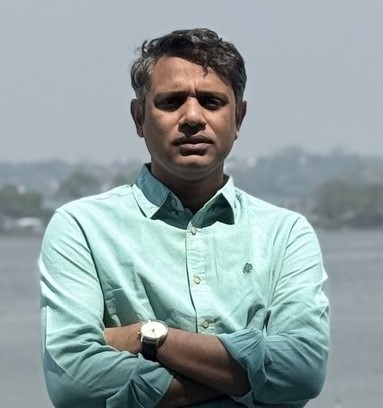
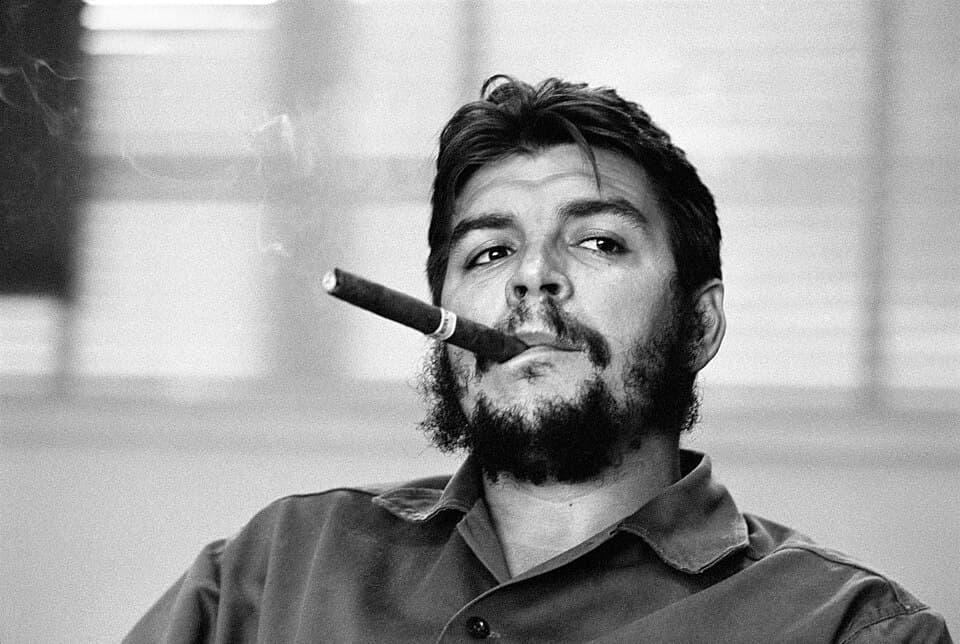
Photo: Wiki
These commercial leviathans are subtly conditioning us—we do not need to overthrow the societal order, we do not need to dismantle the state apparatus; we can just buy a t-shirt or a pair of sneakers bearing Che’s face and indulge in the comforting illusion of being a socialist. And by continuously selling us this very illusion, the capitalists inflate themselves into multibillionaires day by day.
Back in the day, cotton t-shirts bearing the image of Che Guevara were selling like hotcakes in Dhaka. There was a clothing store called 'Nitya Upahar' in Aziz Super Market that started printing Che’s face on affordable cotton shirts. They were flying off the shelves. At that time, Aziz Market hadn't yet become a commercial hub for traditional attire like salwar-kameez or panjabi; rather, it was primarily a hub for books and intellectual life. Aspiring intellectuals, pseudo-intellectuals, and old-school leftists like us used to go there to buy reading material. Beyond that, there were vibrant addas (gatherings) on the first floor centered around Sofa Bhai—the legendary writer Ahmad Sofa. In many ways, Aziz Market was the intellectual epicenter of Bangladesh. Between the rendezvous of revolutionaries, the elite intelligentsia, and the melting pot of passionate youth around Sofa Bhai—Aziz Market burned like a small but remarkably bright light in a dark Bangladesh.
Around the year 2001, Nitya Upahar began selling those printed cotton shirts. One day around that time, upon seeing a young man wearing a Che t-shirt at Aziz Market, I asked him, "Brother, who is this guy?"
The young man replied, "He's some movie star from the West. A huge celebrity."
I felt the sudden urge to gather all of Nitya Upahar’s cotton shirts and dump them into the Buriganga river. But of course, in reality, you cannot do that. Even Prothom Alo would mark Che Guevara's birthday with great fanfare. It was as though Prothom Alo saw itself as the official mouthpiece of the very socialism Che Guevara stood for. Ironically, they never bothered to celebrate the birthday of Karl Marx, the very man from whom Che derived his socialist theory. Because Che sells. Marx does not. Furthermore, while you will frequently find Marx’s name in academic institutions, Lenin is noticeably absent. Reading Marx may produce scholars; reading Lenin may produce revolutionaries. Because reading Lenin—or teaching him—carries the danger of producing Bolsheviks. After all, it was Lenin who did the monumental task of bringing Marx out of the pages of books into the bloody reality of revolution.
It is not just in Bangladesh; globally, for this very reason, capitalists do quite a profitable business out of selling Che Guevara. At times, the whole spectacle feels painfully repetitive, but the logic of capital is simple: it goes wherever profit can be made.
Consumed by Capitalism: How the Revolutionary Became a Commodity
Ernesto Che Guevara—one of the greatest revolutionaries of the twentieth century, an unyielding warrior for socialism, and the eternal nemesis of imperialism and capitalism. His entire life was spent fighting against capitalist exploitation, dreaming of establishing a classless socialist society. But the ultimate irony of history is that, after his death, Che Guevara himself was strategically transformed into a profitable commodity and commercial symbol by modern capitalist economies and state apparatuses. Such is capitalism's perverse genius: it can turn even its most dangerous enemy into a marketable icon. By exploiting Che’s massive popularity, the capitalists are continuously lining their pockets, while carefully and systematically erasing his revolutionary essence, his philosophy, and his Marxist politics.
Che: The Market's Most Profitable Symbol and Corporate Hypocrisy
The iconic photograph of Che Guevara, 'Guerrillero Heroico,' captured by Alberto Korda, is today one of the most reproduced and commercialized images in global history. Where is Che not found in today’s modern market economy?
Banking on the rebellion and anti-establishment culture of the youth, the most prominent name in selling footwear with Che’s picture is Converse. The world-famous American shoe brand Converse has repeatedly featured Che Guevara’s face on their classic canvas shoe designs. Not only that, they have even run advertising and promotional campaigns to sell shoes using Che’s iconic portrait. Interestingly enough, Converse is currently owned by the multinational corporate titan, Nike.
These companies are not agents of socialism; they are among the purest expressions of capitalism itself. They have repeatedly been accused of running sweatshops across Asia and Latin America, where workers endure 12 to 14 hours of exhausting labour for miserably low wages to manufacture these shoes. Nike's annual revenue hovers around $50 to $51 billion, out of which Converse alone earns nearly two and a half billion dollars a year! The very corporate lords whose pockets are stuffed by these mountainous profits are the ones doing business by plastering the face of a radical left-wing revolutionary on the sides of their expensive shoes.
The Fashion Business and the Mega-Profits of Corporate Giants
A significant chunk of the global market for Che-printed apparel is controlled by multinational 'fast-fashion' and e-commerce titans. Among them are globally renowned clothing retailers like Gap and Urban Outfitters, who at one time aggressively displayed and sold thousands of Che Guevara-printed t-shirts, coats, and beanies in their stores. Even on global e-commerce monoliths like Walmart and Amazon, the Che t-shirt remained one of the best-selling items.
Hearing the financial statistics of these corporations will make you shudder. Walmart's annual revenue is roughly $448 billion, and Amazon's is a staggering $574 billion! The apparel brand Urban Outfitters alone clocks an annual revenue of nearly $5 billion. Che Guevara had literally taken up arms against the bourgeoisie to emancipate the marginalized people crushed under capitalist fury. Yet today, those exact Western billionaires and tycoons—whose factory workers are frequently denied adequate toilet breaks and proper overtime wages—are pocketing billions by printing Che Guevara’s 'Guerrillero Heroico' image. They have no regard whatsoever for the ideals of revolution; profit is the only language they understand.
The Ultimate Mockery: Che Guevara on a Liquor Bottle!
This is perhaps history’s most ruthless and farcical example of commercialization. The extent of capitalism’s sheer shamelessness, where even an uncompromising Marxist revolutionary is reduced to a mascot for alcohol, was blatantly demonstrated by multinational liquor brands.
One of the world's largest alcoholic beverage producers is Diageo, best known for brands such as Smirnoff. In 1999, 'Smirnoff' launched a commercial for their spicy vodka, audaciously replacing the communist hammer and sickle from Che's classic photograph with a chili pepper. Adding to the insult, a Czech-based company named "Herba Alko" released an entire bottle of alcohol into the market straightforwardly branded as "Che Guevara Spirit!"
The darkest and most ridiculous irony behind this booze business is the historical fact that Che Guevara never drank alcohol and lived an entirely alcohol-free life. By appropriating the face of a strictly sober individual, capitalists are peddling alcohol solely to sell it under an attractive and 'rebellious' vibe.
Upon witnessing this absolute desecration, Alberto Korda, the legendary photographer of the image, erupted in fury. In 2000, Korda filed a lawsuit against the liquor brand in a UK court. Venting his outrage, he declared, "To use the image of a man who never drank in his life so that capitalist drunks can promote their booze—I absolutely cannot accept this." Eventually winning the lawsuit, Korda did not keep a single penny of the $50,000 he received as compensation. He donated the entire amount to Cuba’s healthcare sector to fund medical treatment for children.
Amazon's t-shirts, Nike and Converse's shoes, or the liquor bottles minted with Che Guevara's name act as glaring indicators of the true, unmasked face of the modern market. These commercial leviathans are subtly conditioning us—we do not need to overthrow the societal order, we do not need to dismantle the state apparatus; we can just buy a t-shirt or a pair of sneakers bearing Che’s face and indulge in the comforting illusion of being a socialist. And by continuously selling us this very illusion, the capitalists inflate themselves into multibillionaires day by day.
The Revolutionary Path of Che Guevara
Ernesto was born into a middle-class Argentine family. He had every opportunity to live comfortably as a successful physician. However, as a medical student, his epic journey across Latin America alongside his friend Alberto Granado—popularly immortalized as 'The Motorcycle Diaries'—derailed the set trajectory of his life. Riding miles after miles, he personally confronted the deafening cries of the destitute, the brutal capitalist aggression unleashed upon the mine workers, and the deep-rooted deprivation of Latin America's marginalized peasants. The old ‘Ernesto’ never returned from that journey; instead, what returned was 'Che Guevara', the great champion of the oppressed.
His 1955 meeting with the Cuban revolutionary Fidel Castro in Mexico marked the dawn of a new historical epoch. To liberate Cuba from Fulgencio Batista's brutal dictatorship, in 1956, eighty-two revolutionaries including Che sailed for Cuba in a small yacht named 'Granma'. Amidst the ferocious guerrilla war deep inside the jungles of the Sierra Maestra, Che proved to be indispensable. His fierce heroism culminating in the final victory at the Battle of Santa Clara not only proved his military brilliance but solidified his ironclad resolve against injustice.
After the Cuban Revolution achieved victory, Fidel placed him in the high echelons of the revolutionary government; he became the President of the National Bank and the Minister of Industries. Very few men in history could effortlessly discard immense state power secured through blood. But he was 'Che'! No state power, comfort, or even his immediate family could tie him down. Fighting for the liberation of exploited peoples in other parts of the world had become vastly more important to him than managing a state. In his profoundly moving farewell letter to Fidel Castro, he wrote: “Other nations of the world claim my modest efforts. You are the ruler of Cuba, therefore you must stay here. But I must go.”
The Bolivian Forest: An Unequal and Fearsome Battle
His purpose for heading into the deep jungles of Bolivia was monumental. Che sought to transform Bolivia into the 'focal point' (foco) for armed rebellion across Latin America, hoping the sparks from there would rapidly spread the fire of revolution throughout the whole continent. He wished to shatter American imperialism by creating "two, three, many Vietnams."
But in Bolivia, the road to fulfilling this vision proved terrifying. Entrenched day after day in the valley of the Ñancahuazú river, he faced severe adversity. He failed to gather the anticipated support from local peasants, and to make matters worse, the Bolivian Communist Party withdrew its backing for his cause. Food shortages and harsh natural conditions severely compounded their difficulties. His old asthma returned to torture him in the form of vicious, breathless attacks. Yet, neither physical agony nor the fear of failure could sway this man of steel from his goal. Alongside a small group of guerrilla comrades, marching through months of semi-starvation, extreme physical distress, and the constant threat of death, Che kept the struggle alive. In human history, it stands as an unparalleled example of an individual’s dedication to an ideology.
Ironically, back in Bangladesh, the hardcore 'Sarbahara Party' and its leader Siraj Sikder considered Che Guevara a revisionist and a flawed revolutionary. The Sarbahara Party would scornfully mock radicals who believed in armed guerrilla struggle as 'Che-panthis' (Pro-Che). All this, despite the fact that Che Guevara had a remarkably clear understanding of imperialism.
In regards to this exact vision, a film comes to my mind. In 2022, an excellent Spanish-language movie titled 'A Man of Action' was released on streaming platforms. The film is based on the real life of the legendary anarchist and master-forger, Lucio Urtubia.
One of the most unforgettable moments of Lucio's life was his secret meeting in Paris in 1962 with Cuba's then-minister of industry and iconic revolutionary, Comrade Che Guevara. That scene in the film acts as a masterful display of ideological and philosophical exchange.
Lucio's meeting with Che took place in a safe-house bathroom in Paris. Inside the quiet room stood Che Guevara in his olive-green fatigue, smoking a cigar. Blue smoke drifted across the room.
Lucio Urtubia entered. Standing directly in front of one of the world's greatest revolutionaries, he was deeply nervous but full of intense excitement. He swiftly snapped open his briefcase before Che. Tightly packed inside were stacked traveler's checks of the 'First National City Bank', along with bundles of American dollars. Everything looked flawless—but it was entirely counterfeit.
Full of sheer confidence, Lucio explained his master plan:
“Comandante, look at these! Absolutely flawless counterfeits! Not even the central banks can catch this forgery. You run a state now; you are a minister of a country like Cuba. You have the power. Let’s join forces and print millions, billions of these American dollars and checks! We will drown America's economy in a flood of fake paper. To destroy American imperialism and capitalism, guns are not needed; their own currency is enough!”
Che remained perfectly calm and still. Like a seasoned commander, Che quietly observed the young anarchist's excitement. Slowly, Che picked up a counterfeit check. He examined it, and then, in total silence, tossed it back onto the briefcase.
To sustain a sovereign state like Cuba, Che had to navigate harsh political realities. He knew perfectly well that the fall of imperialism is rarely that simple.
Taking a deep drag on his cigar, Che exhaled. Breaking Lucio's illusion, Che offered a calm yet iron-clad reply:
"American imperialism is a giant elephant. And what you are showing me right here—the money of capitalism—is nothing but the discarded waste of that monster. Comrade, remember one thing... no matter how hard you try to strike it, you can never kill an elephant by throwing its own dung at it!"
Lucio looked disappointed. He had believed this idea could change the world. Che explained that if American imperialism were to be defeated, it would require confronting it through revolution—through the sacrifices of ordinary people and armed struggle. The empire could not be overthrown with its own printed waste.
Although Che rejected the idea that day, Lucio did not stop. Continuing the fake traveler's check operation as a solitary anarchist crusade, Lucio brought the giant American 'First National City Bank' to the edge of the financial abyss, generating millions of dollars to secretly finance left-wing guerrilla units from Latin America to Europe.
CIA Conspiracy and Captivity
News of Che's presence in Bolivia triggered massive panic in the United States. To stop him, the CIA directly intervened. Bolivian Rangers were provided with elite U.S. Special Forces training, weaponry, and surveillance technology just to catch one man. On October 8, 1967, at the 'Quebrada del Yuro' ravine, encircled by hundreds of highly trained troops, Che was caught in a CIA intelligence net. After a long, unequal firefight, his ammunition ran out. A bullet disabled his rifle, and he was captured.
The very next day, October 9, he was taken to an abandoned schoolhouse in the village of La Higuera. Even in the face of death, his defiance never wavered. Looking straight into the eyes of the hesitant executioner, Che spoke with a steady, fiery voice: "Shoot, coward! You are only going to kill a man, not his ideas!"
The Secret Burial and the Hero's Return
The assassin's bullets riddled his body, but the American empire's ultimate fear was his corpse. They knew his grave could one day become a site for pilgrimage and resistance. Thus, as definitive proof of his identity, the Bolivian military, acting with CIA involvement, cut off both his hands. Under the cover of darkness, he was buried in an unmarked mass grave with other revolutionaries near Vallegrande, in an attempt to permanently erase him from history.
But truth cannot be buried forever. Thirty years later, in 1997, acting on information provided by a former Bolivian army officer, Cuban and Argentine forensic experts recovered Che's remains from a clandestine grave near Vallegrande. The body they found had no hands. Later that same year, he returned to Cuba, where millions mourned him and he was laid to rest with full state honours in Santa Clara.
Today's World and the Immortal Che Guevara
Death transformed him from a revolutionary into an enduring symbol of resistance. Whether in Palestine, in the forests of Latin America, or on the streets and university campuses of the developed world, whenever people march against injustice and for liberation, the first face to appear on their banners is Che Guevara.
History will remember him as a fearless man who never learned to compromise, who renounced the temptations of power and gave his life for the world's most marginalized people. As long as exploitation and inequality endure, Che Guevara will live on in the clenched fists of rebellious youth and in the shining eyes of all who long for freedom.
June 14 marks the birth of Comrade Ernesto Che Guevara. Happy Birthday, Comrade.
---
*Author: Editor, Dhaka Papers
Email: [email protected]