Cockroaches survive. Modi's regime is about to learn that lesson

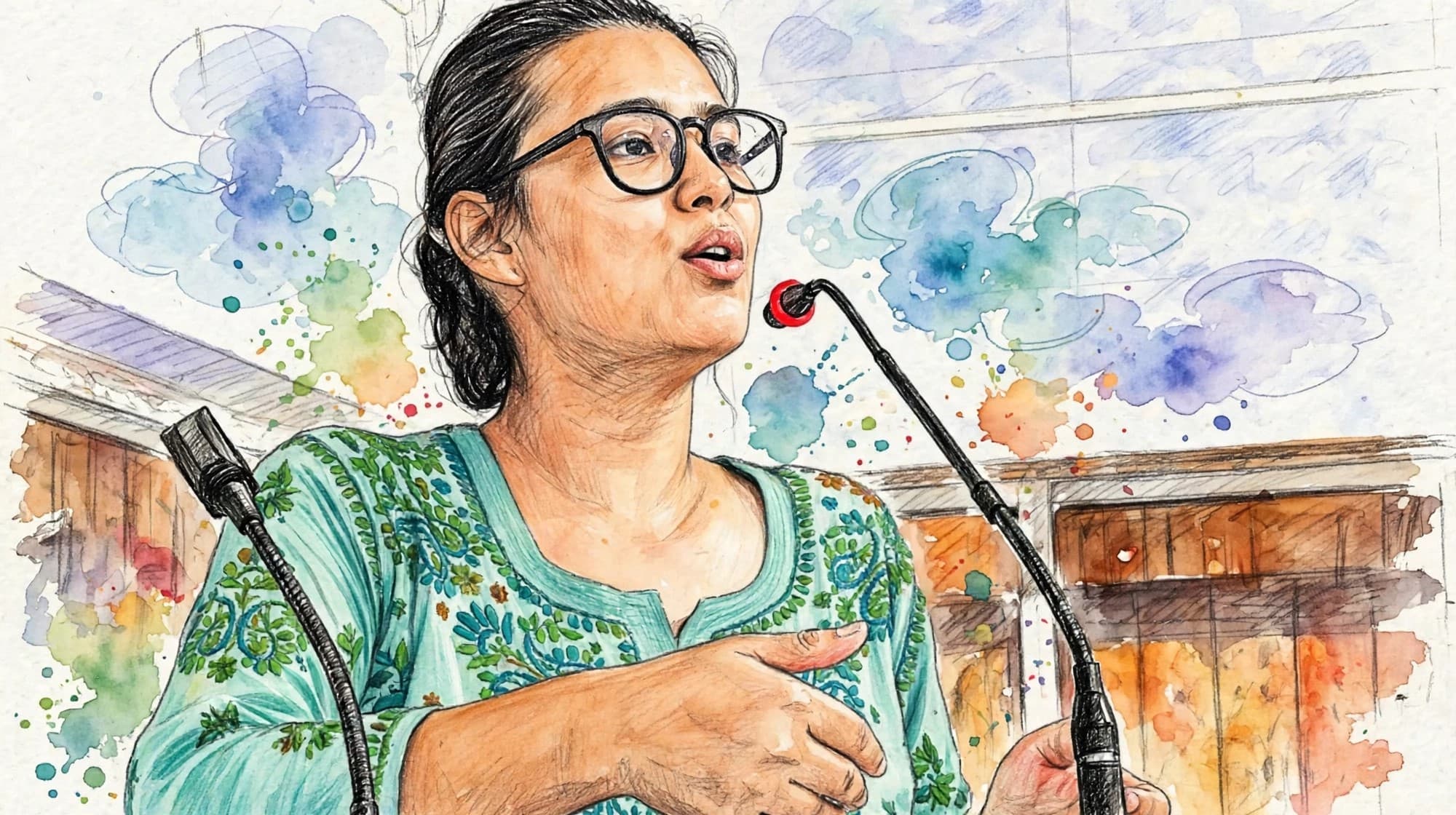
Sketch: AI
The generation now on the streets is young, angry, and unemployed. Most do not come from ideological backgrounds. They are simply fed up.
Cockroaches survive. That much is clear to anyone watching the young Indians at Delhi's Jantar Mantar right now. Call them what you like. Send the police, the courts, the entire RSS apparatus after them. They do not disappear.
This time, though, something has shifted. They are not alone anymore.
Farmers from Punjab and Uttar Pradesh are trickling in. Industrial workers from Noida have started showing up. Dalit activists, minority rights groups, even a few old-school communist leaders who had not been near a protest site in years—all of them are beginning to assemble alongside the students.
It began with a leaked examination paper. It has turned into something much larger.
The background is hardly new. Modi, Shah, Adani, Ambani—the four-pronged nexus from Gujarat—are systematically selling off the republic. Water, land, forests—the basics of life—are being plundered. Education and healthcare are being privatised. The railways, once a symbol of public ownership, are quietly being handed over. The RSS runs an extensive propaganda apparatus that keeps much of this out of public view.
The generation now on the streets is young, angry, and unemployed. Most do not come from ideological backgrounds. They are simply fed up. When the NEET question paper leaked, their futures were snatched away in plain view. They came out to protest. Then the Chief Justice of India called them "cockroaches."
That word, intended as an insult, was immediately reclaimed. The Cockroach Janata Party was not formed in a committee room. It was born on the pavement, from that single slur.
Politics is rarely neat.
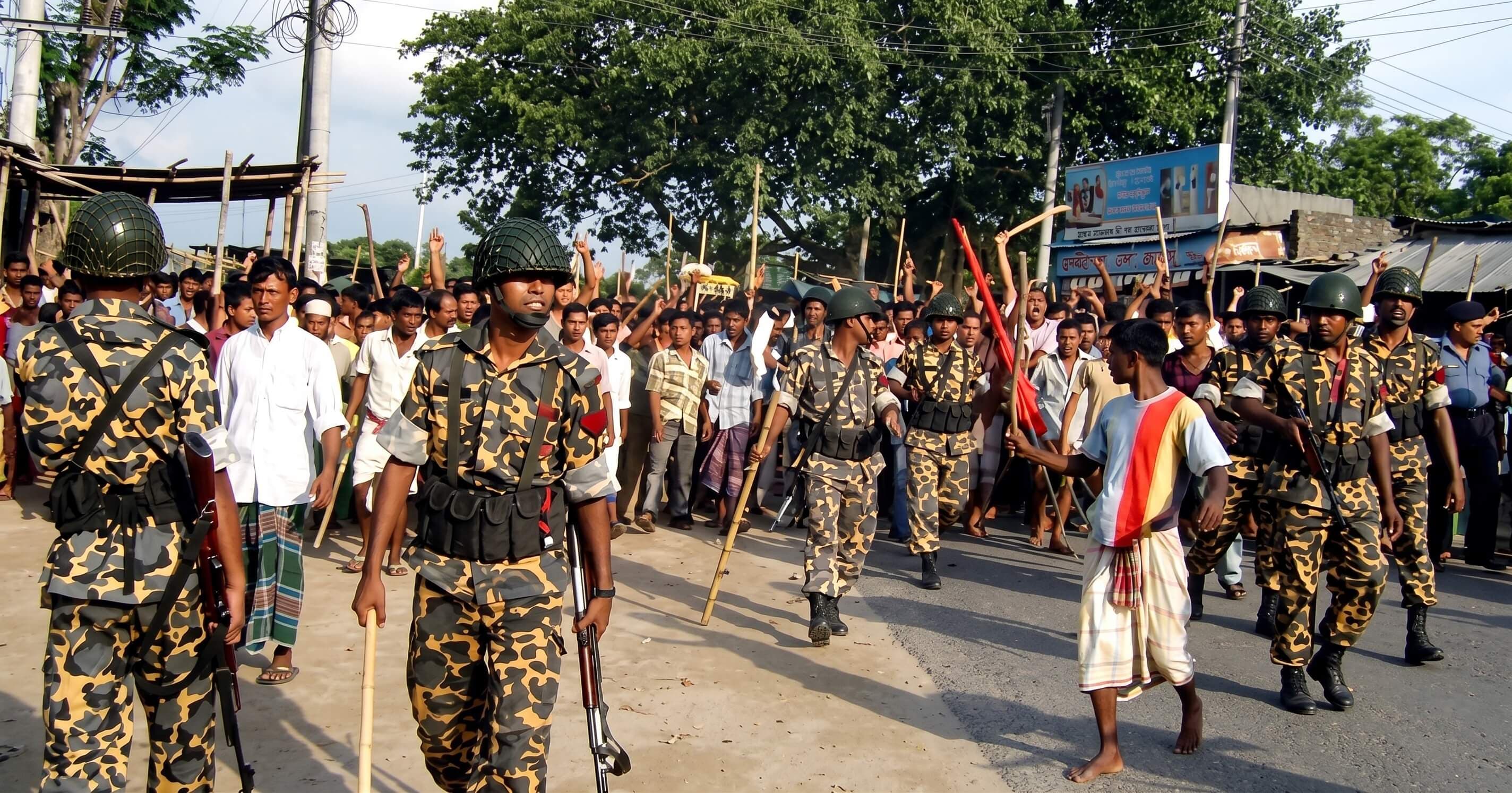
Bangladesh offers a parallel. A few years ago, Sheikh Hasina's government branded quota-reform protesters "Razakars"—a loaded term linked to the collaborators of 1971. The students turned it around. "Ami ke, tumi ke—Razakar, Razakar!" they chanted. Within weeks, the streets of Dhaka were theirs. It became a turning point. India's "cockroaches" are attempting the same inversion.
Georgi Dimitrov, the Bulgarian communist, argued in the 1930s that fascism cannot be defeated through ideological purity alone. You need a broad coalition—social democrats, reformist trade unions, even sections of the oppressed bourgeoisie. Anyone willing to stand against authoritarianism. That strategy is now unfolding in real time at Jantar Mantar.
The Congress party, under Rahul Gandhi, has rediscovered its old socialist language. The CPI(M)'s senior leaders—Prakash Karat, Brinda Karat, M.A. Baby—are present, despite having opposed the Congress for decades. The Naxalite formation, CPI(ML)-Liberation, whose general secretary Dipankar Bhattacharya usually views parliamentary parties as irredeemable, has also sent its cadres. Student organisations like SFI and AISA are fasting alongside middle-class aspirants who probably never imagined sharing a platform with communists.
It is an unlikely, messy grouping. Fascism does not care about doctrinal purity. It only cares about crushing you. Sometimes you simply have to set differences aside and fight.
But the students are no longer the main story.
Farmers are now entering the picture in a serious way. Not as symbolic gestures, but as active, committed participants. These are the same farmers who spent more than a year camped at Delhi's borders, eventually forcing the Modi government to roll back the three farm bills. They have not forgotten how the state treated them. They see this as a new front.
Then there is Noida, Uttar Pradesh's industrial corridor. Workers there have been striking against exploitative conditions for months. Their labour protests are now finding political expression through this platform. A movement restricted to college campuses remains a pressure group at best. But when workers and peasants join in, the arithmetic changes. Class struggles, historically, are what ultimately compel regimes to negotiate with reality.
The Cockroach Janata Party has directly appealed to farmers in Punjab, Haryana, and Western Uttar Pradesh. The United Kisan Morcha has responded. Dalit-led political groups and organisations representing Muslims and other minorities are also stepping forward. What began as a student protest is gradually becoming a broader social coalition.
This is not merely about one exam paper. Yes, the immediate, surface-level demand is the resignation of Education Minister Dharmendra Pradhan. But that is only the visible entry point. From the very beginning, the Cockroach Janata Party has made its larger objectives clear: structural reform of the judiciary, dismantling of fascist networks within the state apparatus, and—above all—a restoration of what the Constitution actually promised: federalism, pluralism, equality, and fraternity.
The RSS-BJP project is aimed at building a very different India. A centralised, monolingual, monocultural majoritarian fortress, dressed up as a democracy. Hindi, Hindu, Hindustan—that is the template. The Constitution's promise of diversity and federalism is being replaced by a single, dominant narrative. The Satyagraha at Jantar Mantar rejects this outright. It insists on a different India. Noisy. Plural. Unapologetically chaotic.
Can this momentum last? I have no idea. But something is undeniably shifting. For the first time in nearly a decade, the BJP's aura of invincibility is showing cracks. People are beginning to shed their fear. And when fear begins to crack, the street transforms.
The Chief Justice thought he was dismissing these young people with a condescending epithet. Instead, he handed them a shared identity. The "cockroaches" are multiplying. Regimes that underestimate the resilience of the oppressed usually do not survive very long. That is not a moral statement; it is simply how power tends to collapse.
Across India, the crushed, the humiliated, and the systematically ignored are watching. For the first time in a long while, they are daring to imagine something different. Whether that imagination translates into lasting change is another question. But the fact that it exists at all is, perhaps, the government's biggest worry.
--
Writer: Poet, Essayist & Journalist, Kolkata, India
Email: [email protected]