Rooppur and Bangladesh's National Capability: The Long Road Was Not So Easy
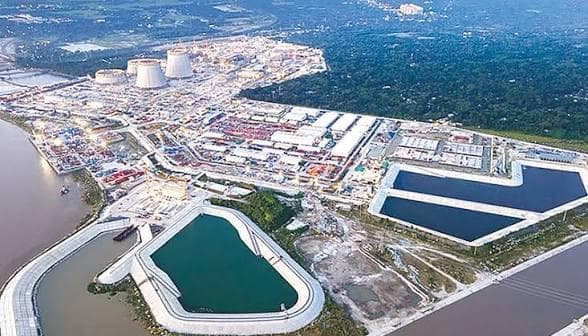
In simple terms, nuclear capability is not just a power plant – it is a certificate of a country's attainment of the highest levels of intellect and modern technology. Just as it is the key to development in peacetime, so too in times of crisis it is a powerful shield for national security. By achieving this capability, Bangladesh has opened a vast gateway of science-based employment and research for its future generations.
In the latest Human Development Index published by the United Nations Development Programme (UNDP), Bangladesh ranks 129th among 193 countries. In the Passport Index, the Bangladeshi passport holds the 93rd position, and in press freedom, Bangladesh stands 165th among 180 countries worldwide. Amidst these pieces of bad news – suggesting that Bangladesh is not doing particularly well in any area that enhances our honour and self-respect – the country has long since entered the super-elite group as the world's 33rd nuclear power plant nation.
Bangladesh began the main infrastructure construction, or 'First Concrete Pouring' (FCP), of the first unit of the Rooppur Nuclear Power Plant on November 30, 2017. However, the actual day of entering the 'Nuclear Club' came later.
Bangladesh officially achieved the status of a member of the 'Nuclear Club' on October 5, 2023. On that day, the first shipment of uranium from Russia for the Rooppur plant was formally handed over to Bangladesh.
The fuel (uranium) was handed over through a virtual ceremony attended by Russian President Vladimir Putin and Bangladeshi Prime Minister Sheikh Hasina. By receiving this fuel, Bangladesh was recognised as the world's 33rd nuclear power-using country.
Skilled Manpower and Technical Excellence
Operating a nuclear power plant is not like running an ordinary power station. It requires a vast workforce skilled in advanced physics, chemistry, and nuclear engineering. In the process of building this manpower, the country's standards of education and research are elevated to an international level. While controlling nuclear energy, the nation becomes proficient in extremely complex and delicate engineering sciences, which are also useful in other industrial sectors.
The Possibility of Dual-Use
Nuclear technology is fundamentally a dual-use technology. This capability adds a new dimension to a country's strategic strength. With the knowledge gained from a nuclear power plant and, in many cases, control over the fuel cycle, a country can – if it chooses – through long-term planning transform this into defence or military strength; however, this depends on international law and oversight. Nations with nuclear capabilities are given distinct importance in global politics, which acts as a powerful deterrent in protecting national sovereignty.
In other words, from the skilled manpower and technology being mastered at the nuclear power plant, it will be possible in the future to produce nuclear bombs as well. In today's context, this provides national security to any country. America will not attack any country that possesses nuclear bombs.
Use in Peace and Prosperity
Beyond electricity alone, nuclear technology can revolutionise three major sectors. This technology is indispensable for radiotherapy in cancer treatment and for diagnosing various complex diseases. Using radiation, it is possible to develop improved crop varieties and preserve perishable food products for long periods. Additionally, isotope technology is used in mineral resource exploration and quality control in factories.
A Symbol of National Capability
Having the capability to use nuclear energy means a country is self-sufficient in energy security, scientific leadership, and economic stability. Alongside ensuring cheap and carbon-free electricity in the long term, it also helps secure a place among the world's developed nations. By reducing dependence on imported energy, it saves foreign currency.
In simple terms, nuclear capability is not just a power plant – it is a certificate of a country's attainment of the highest levels of intellect and modern technology. Just as it is the key to development in peacetime, so too in times of crisis it is a powerful shield for national security. By achieving this capability, Bangladesh has opened a vast gateway of science-based employment and research for its future generations.
Where lies the concern?
In 2015, I went to Russia and landed in the city of Rostov-on-Don. They call it Rostov Oblast. From there, I was to go to the Rostov Nuclear Power Plant the next day. After travelling a continuous 600 kilometers, I reached the Rostov plant. Both sides of this long road were uninhabited; I did not even see any crops. It may have been the beginning of winter, and perhaps for that reason there were no crops in the fields. The distance from the hotel where we stayed to the power plant was more than 20 kilometers. We found a few people around the hotel, but they were essentially those working at the plant.
Upon reaching the plant, I saw that the water for its cooling towers came from the Don River, 200 kilometers away, through a vast artificially constructed channel. There are no settlements around the plant. Meters are installed 20 kilometers away, constantly monitoring radiation levels in the air. All arrangements for rapid rescue are in place in case of danger, as there are virtually no people in that city. Primarily, the families of the thousands of people who work at the plant live there. And all of this was built mainly during the Soviet era under Russia's communist government. The Rostov plant I visited had begun construction of its fourth unit around 1978; when we visited at the end of 2015, work on that fourth unit was still ongoing.
The main problem with nuclear power plants is the long-term construction. Regional geopolitics and international politics are major reasons behind this. For those reasons, it cannot be done abruptly; it is a long-term matter. There are also issues of technology and security. However, a major doubt arose in my mind back then: we (Bangladesh) do not have water in the Padma. During the dry season, the water flow from below the Hardinge Bridge to the Rooppur point drops to as low as 14,000 cusecs. Operating the cooling systems for two 1,200 MW units with this water is truly difficult.
Additionally, there was significant doubt regarding the technology itself. Bangladesh is the first country outside Russia to use VVER-1200 technology. A technology is considered 'proven' (safe technology that has been in operation for at least 10 years) only when it has been on the market for a decade and substantial experience is available in the public domain. No VVER-1200 nuclear power plant is in production in any country outside Russia; Bangladesh is set to be the first. This is a major concern from a security perspective. We cannot learn about its pros and cons from any third party. Our initial discussions were that the VVER-1000 technology plant would come to Bangladesh, which has been in production for many years in the Soviet Union, Russia, and other countries. But the then-ambassador of Bangladesh to Russia was the key player behind this technology change. VVER-1000 technology is not only proven, but its price was also much lower than the VVER-1200 technology currently being installed.
Dr. S. M. Saiful Hoque assumed charge as Bangladesh's ambassador to Russia on August 26, 2009, and served until December 24, 2019. This ambassador was a member of the team that prepared the Awami League's 'Charter for Change' presented during the 2008 election. The main work was done by Dr. Abul Barkat. As a reward, Saiful Hoque was made ambassador to Russia.
Discussions were underway for the VVER-1000 model plant to come to Bangladesh. But Saiful Hoque convinced the government that the VVER-1200 model was more modern and effective. Allegations exist that Saiful Hoque had a personal interest behind this. One of the main reasons for this allegation is that he secured the local agency for Russia's oil and gas company Gazprom for a specific person of his choice, and this same individual was the local agent for the wheat purchased from Russia at an inflated price. This was reported by me and the newspaper Prothom Alo at that time.
RMM Power & Energy Limited was Gazprom's local agent. A large portion of its shares was held by the Honorary Consul of Belarus, Aniruddha Roy, and his wife. Additionally, other shares were held by Mohiuddin Ahmed Mahin. Mahin served for a long time as the president of the Bangladesh Finished Leather, Leathergoods and Footwear Exporters Association. He held this position during the Awami League's 16 years; I don't know if he still does. Another owner of RMM Power & Energy Limited was the then-Member of Parliament for the Dhaka-11 constituency (Gulshan, Badda, Vatara area), A. K. M. Rahmatullah. It can be assumed that due to former student union leader Aniruddha Roy's Russian connections, and Rahmatullah and Mahin's government connections, they were able to become Gazprom's local agents.
Gazprom secured the work of drilling 20 wells in Bangladesh. Approximately 180-200 crore taka was spent on each well, whereas Bapex could have done the work for only 60-70 crore taka. Because proper technical standards were not maintained, sand began rising in the drilled wells, causing production to stop. Later, those wells ultimately had to be restored and brought back into operation by BAPEX itself.
Thus, Gazprom began making exorbitant profits. And this Gazprom is not even Russia's state institution; it is a Gazprom registered in the Netherlands. Perhaps because of sharing these limitless profits of Gazprom, on August 27, 2017, Aniruddha Roy disappeared from Gulshan and was released only after 81 days. During this detention, Mahin and Rahmatullah forced Aniruddha Roy to sign cheques and withdrew all the money from the company. After being released, Aniruddha Roy went abroad for some time. Many journalists in Dhaka knew about this kind of hostage-taking at the private level at that time.
Since Gazprom was making exorbitant profits and Aniruddha Roy was identified as close to Justice S. K. Sinha, there was no longer any point in keeping him as Gazprom's local agent. Gazprom's new local agent became an institution named National Electronic BD. The owners of this institution are a Russian citizen, Mia Sattar, and his brother Sohail. National Electronic BD, besides Gazprom, also obtained the local agency for Russia's food-exporting institution, Prodintorg.
That was around mid-2022. Immediately afterward, National Electronic BD secured two major deals. One of them was a purchase order for Prodintorg to buy 500,000 tonnes of wheat from Russia at an inflated price – about 240 crore taka above the market price.
The Energy Division is spending 694 crore taka to have Gazprom drill three gas wells in Bhola. However, through the state-owned institution Bapex, the cost of drilling each well is 80 crore taka. Thus, the total expected cost would have been 240 crore taka. By using Gazprom, the additional expenditure is 454 crore taka. Investigations have shown that the reason for the government's additional expenditure of 694 crore taka on wheat imports and gas well drilling is the cost of the Russian company's local agent or intermediary. That intermediary in Bangladesh is Md. Sohail. He has an institution named National Electronic BD in Mohakhali, Dhaka.
Making National Electronic BD the local agent for Gazprom and Prodintorg was primarily due to the influence of Bangladesh's ambassador to Russia, Dr. S. M. Saiful Hoque. Using the flag-bearing car of the Bangladesh Embassy in Russia, Saiful Hoque introduced Mia Sattar to Russian businessmen. Under Saiful Hoque's sole authority, he did not stop at merely securing the local agency for these two institutions; during the Awami League's final term, he secured two projects worth 694 crore taka without market competition. At that time, whenever Saiful Hoque came to Dhaka, even his hotel rent was paid by National Electronic BD.
Nothing happened to Saiful Hoque. He, along with his Indian wife, is living quite comfortably in his own five-story house in Mumbai's most expensive Juhu Beach area. And Dr. Abul Barkat is serving time in jail. So why all this discussion about Saiful Hoque? It is to show that most of those who cause Bangladesh's total ruin are not even known to many people. Moreover, they never face justice. My assumption is that National Electronic BD's owner Sohail and his brother Mia Sattar are still doing business comfortably in Bangladesh. Because they had written on their website that they were also the local agents for the Rooppur Nuclear Power Plant – and that is why all this discussion exists. Although this is no longer written on their website.
There are two main criticisms of the Rooppur Nuclear Power Plant:
1. Within 200 kilometres of Russia's plants, there are no major human settlements, and water resources are endless. In contrast, the eastern wall of the Rooppur plant is surrounded by a primary school; I have even seen cow dung being dried on the plant's wall. Hundreds of thousands of people live throughout Ishwardi, and there is no way in the world to relocate so many people quickly. Hence, the risk remains.
2. The plant's construction cost is quite high – significantly more expensive compared to other Asian countries. Whether this could have been avoided is worth considering, although such costs depend on investment in the plant and negotiation over technology transfer.
Although some people believe that from a USD 12.65 billion project Sheikh Hasina and her family have stolen USD 5 billion, building two 1,200 MW nuclear power plants with Russian technology would never be possible at USD 7.65 billion – no such two units have ever been built in the world at that price. That does not mean there was no corruption in the USD 12.65 billion Rooppur project. However, many think that the Rooppur 'pillow scandal' is related to the USD 12.65 billion project. The real truth is that the Rooppur pillow scandal has no connection with the USD 12.65 billion project. The pillow scandal was a procurement by the Housing and Public Works Department, and it was not related to the funds of this project. When domestic and foreign media talk about the pillow corruption in connection with the USD 12.65 billion project, the matter becomes quite ridiculous and masks the real crime.
That does not mean that the Sheikh Hasina government did not commit any corruption in this project. Like other projects, it would not be unreasonable to assume that corruption cast a long shadow over the Rooppur project as well. But, as elsewhere, here too we are talking while hiding the main player. The main discussion should be about Ambassador Saiful, yet there is no discussion about him.
I will end this article with an example of who wants to destroy our national capability. It was probably an incident from 2018. A foreign delegation came to Bangladesh to discuss Rooppur's waste management. I was invited there. Under special security arrangements, the discussion took place at the Sara Resort in Gazipur.
The main point of discussion by these foreigners was that Russia would not take back waste from Bangladesh, because Russia had been dumping waste in Belarus and various problems had emerged. Since Russia had only verbally discussed taking back Rooppur's waste with Bangladesh, but there was no written agreement – therefore Russia would not keep its word. And who doesn't know that waste management is the primary issue for a nuclear power plant? Although in today's era, waste can be recycled to produce energy again. The organisers demanded that I focus on this and write continuously, because I had kept the plant's general matters under intense observation.
The main reason for keeping it under intense observation was to act as a watchdog. If there is press or media oversight, compliance follows. Afterwards, I began reading the actual contract from a government office. Almost every day I would go to an official's room, and he would give me the opportunity to read. I took notes. It turned out that this contract was like an epic – by weight, it would be several kilograms. It clearly stated that Russia would take back the waste. I did not write that report.
The astonishing thing is that the person who had organised that highly secured discussion at the Sara Resort was a famous individual who later became an advisor to the interim government. Looking back today, it seems that whether they are Russia's local agents or that advisor of the interim government – they may all appear different, but they are all cloves of the same garlic bulb, trapped in a single knot. We have never been able to sever this bond. We couldn't in the state after 1971, nor have we been able to since. I don't know about the future, but in history we have never been able to keep this elite, anti-national force away from power.
We must acknowledge that having a nuclear power plant is a matter of major national capability. Sheikh Hasina did not retreat from achieving that capability after 2010. We are having to pay a high price for it – but even by paying a high price, we might still not have been able to own such a prideful power plant, one that in the future could become a major catalyst for Bangladesh's core security.
Welcome Bangladesh to the 33rd Nuclear Club. This is not a matter of party or ideology. This is a matter of Bangladesh's national capability.
Let Rooppur become the symbol of our national capability. Let it become the symbol of our pride. Let it become the center of our agriculture, medicine, science – even our national security.
__________________________
Author: Editor, Dhaka Papers
Email: [email protected]