Is America Returning to the Sixties?
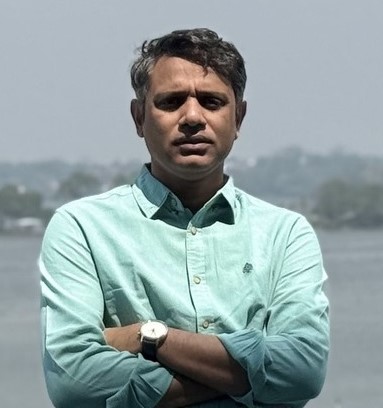

Photo: From video grab
The "No Kings" movement saw nearly 10 million people participate in nationwide protests—the largest in the country's history.
The largest protests in American history have erupted. From New York to California, millions have taken to the streets to oppose President Trump’s aggressive war policies. This massive mobilization mirrors the era of the Vietnam War.
Yesterday (March 29), Bernie Sanders stated clearly that the American people do not want to be ruled by a king or an autocrat. "The people shall govern America," he declared.
The "No Kings" movement saw nearly 10 million people participate in nationwide protests—the largest in the country's history. Protesters voiced strong opposition to a potential war with Iran and carried placards against the oil blockade of Cuba. They demonstrated unprecedented resistance to war and criticized Trump’s immigration policies.
In 2024, Trump secured legal immunity through a court ruling, a level of protection never before granted to a U.S. president. In 1974, when Richard Nixon tried to hide Watergate documents, the Supreme Court reminded him that a president is not a king. However, in 2024, that 200-year-old tradition was shattered, placing Trump beyond the reach of the law.
Millions occupied the streets from coast to coast, reminiscent of the 1960s. During the Vietnam War era, protests were led largely by leftists, with the Black Panther Party (BPP) serving as a powerful force.
Today’s protesters are demanding constitutional reforms. They want to restructure the Supreme Court to prevent justices from issuing unilateral rulings that undermine democracy. They also seek to grant Congress the power to block impulsive presidential decisions.
Signs of a major defeat for Trump in the November 2026 midterm elections are becoming clear. His stubbornness and arrogance regarding immunity have alarmed moderate voters. The movement has brought socialist slogans back into the mainstream, especially among the youth. Gig workers are organizing into far-left unions, and Starbucks workers are leading strikes under leftist leadership.
The Legacy of the Black Panther Party
The Black Panther Party emerged in the 1960s as a popular leftist organization. Their "Survival Program" provided free breakfast for thousands of children and operated free medical clinics and schools. The Panthers were fierce opponents of the Vietnam War, arguing that the government was drafting poor Black youth to fight other oppressed people. Their famous slogan asked: "Why should a Black man go 10,000 miles away to kill Vietnamese when he is deprived of his rights in his own country?"
Unable to defeat them politically, the American ruling class launched a secret assassination program called "COINTELPRO." Operated by the FBI, this program targeted, arrested, and killed BPP leaders. On December 4, 1969, Fred Hampton and Mark Clark were shot and killed by police while sleeping in their Chicago apartment. It was later proven to be a planned assassination, with police firing nearly 90 rounds. Other leaders, like Bobby Hutton, were killed in clashes, while co-founder Huey P. Newton was later killed in 1989. Many others were forced into exile or faced personal ruin.
The FBI killed nearly 30 influential leaders and arrested over 2,000 members. Some served up to 40 years in prison. Leaders like Eldridge Cleaver fled to Algeria and France, while Assata Shakur remains in Cuba. Under intense state repression, the movement weakened, and the party was officially dissolved in 1982.
Can One Escape the Fire?
In Chanakya Sen’s novel Putra Pitake (Son to Father), a young man who fled the Naxalite movement in Kolkata for the safety of America writes to his wealthy father. But he arrived in an America engulfed by the Vietnam War and the Black Panther movement. The son’s letter raises a timeless question: we flee our homelands only to find ourselves in an even larger battlefield. We try to run from ourselves.
The novel begins with the son looking at the snow in America, reflecting on his 24 years of unwritten history and his complex relationship with his father. It highlights the vast difference between the father’s youth and the son’s reality. Life is singular; it should be lived so that there are no regrets at the time of death.
The New Resistance
Seeing the "No King" movement reminded me of the Black Panthers. While the BPP is gone, groups like Antifa have emerged in this "post-truth" era. A few years ago, they created autonomous zones during the Black Lives Matter movement. In current protests, the hammer and sickle flags of communists are visible on American streets.
I carefully watched videos on X (formerly Twitter), looking for slogans in Bengali, Arabic, Hindi, and Urdu. Among the various placards, I looked for "Lal Morich" (Red Chili), a small but influential organization of Bangladeshi leftists in the U.S.
Will this current wave of American protest also be suppressed by a secret FBI program like COINTELPRO?
The attack on Iran has shifted our perspectives. Lenin once said we live in the age of imperialism and proletarian revolution. Today, Lenin's thesis feels more relevant than ever—perhaps more than we even realize. If we truly understood its relevance, we would be redesigning our entire national political strategy.
________
Author: Editor, Dhaka Papers
Your contribution keeps investigative journalism fearless, transparent, and accessible to everyone. To support us securely donate from anywhere.